How Artificial Intelligence Has Changed Team Work Over the Past Year: From Experiments to Real Processes

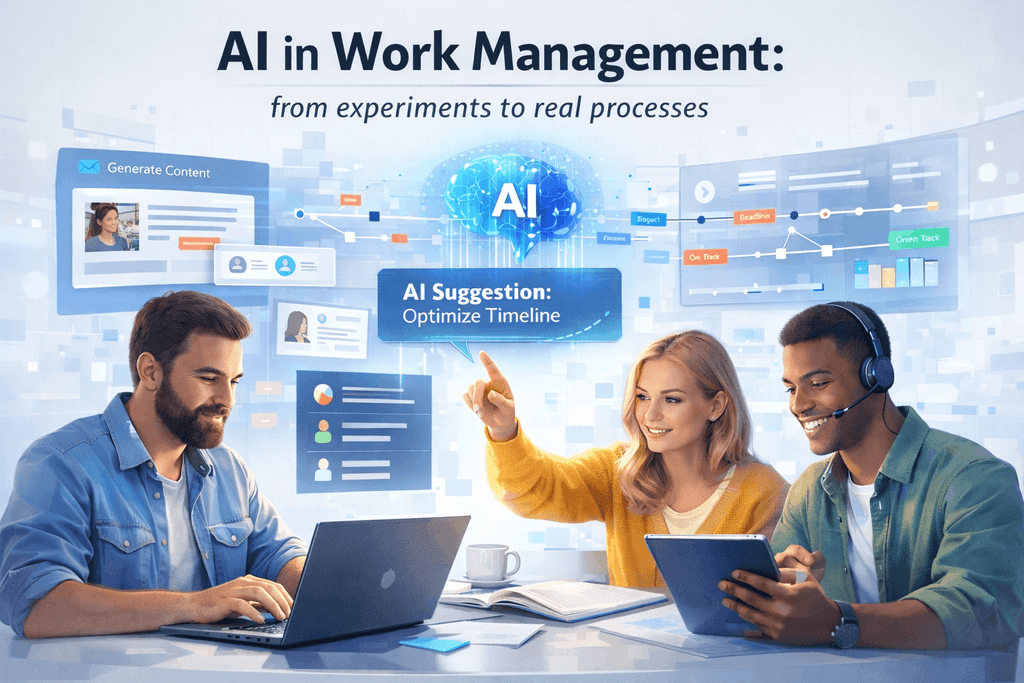
Just a year ago, artificial intelligence in most companies remained a tool for isolated tasks. It was used for content generation, automated customer responses, basic analytics, and presentation creation. AI sparked excitement but rarely influenced core work processes. In most cases, it existed alongside work management systems rather than being embedded within them.
Teams could write texts faster or receive suggestions, but project planning, deadline control, and resource allocation were still handled manually. As a result, the value of AI was often local—it helped with small tasks but did not improve overall business efficiency.
Over the past year, the situation has changed dramatically. Businesses began integrating artificial intelligence directly into teamwork management. AI became part of planning processes, resource coordination, and outcome forecasting.
This shift—from experiments to the systematic use of AI in work management —has become the key transformation in today’s market.

How Companies Used AI Before: Tools Without a System
Until quite recently, most organizations used AI in a fragmented way, without connecting it to core work processes.
The most common use cases looked like this:
- text generation for marketing, sales, and internal communications
- creation of visual content and design
- chatbots for customer support
- basic data analysis and demand forecasting
These AI productivity tools saved significant time in specific tasks but did not change how projects were actually built and managed.
Project managers continued to create plans manually, calculate timelines in spreadsheets, and balance team workloads intuitively. When client changes appeared or priorities shifted, everything had to be recalculated from scratch.
As a result:
- deadlines were regularly missed
- teams worked under constant overload
- managers spent most of their time on coordination
- problems were discovered too late
AI helped locally, but it did not create systemic efficiency.
What Changed Over the Past Year: AI Entered the Processes
The past year has been a turning point for AI adoption in business. Companies began to realize that the true potential of artificial intelligence is unlocked when it is embedded directly into work processes.
Today, AI:
- analyzes project execution history and real team productivity
- predicts completion timelines for tasks and entire phases
- accounts for dependencies between processes
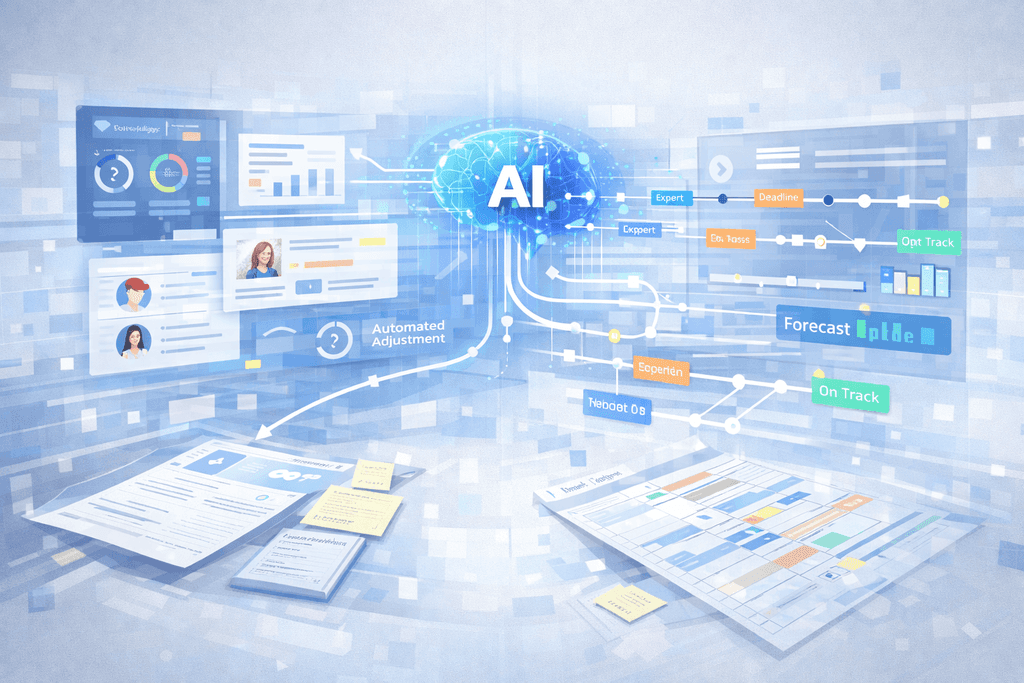
- automatically adjusts plans when changes occur
AI for teams has evolved into an intelligent layer of work management. Instead of reacting to problems after they appear, businesses have started acting proactively. Systems highlight risks before they affect outcomes, allowing teams to adjust processes in advance.
From Manual Coordination to Intelligent Workflow Automation
Alongside planning, automation has also evolved. Traditional automation helped eliminate routine tasks but did not account for the complexity of real-world processes. Modern intelligent workflow automation:
- analyzes the context of each project
- adapts to changes in real time
- makes data-driven decisions
- optimizes workflows without manual intervention
h3 Examples of modern automation include:
- automatic task assignment based on team skills and experience
- schedule adjustments when changes or new priorities arise
- forecasting resource overload risks
- balancing workloads across parallel projects
As a result, companies stop losing control in complex environments and achieve more consistent outcomes.
How AI Improves Team Productivity
Implementing artificial intelligence in teamwork management quickly delivers tangible results.
Key impacts include:
- significant reduction in manual coordination
- more consistent deadline delivery
- real-time visibility across all processes
- balanced team workloads
- faster management decision-making
AI productivity tools now operate as a unified system that supports the entire project lifecycle—from planning to execution.
Intelligent Planning as the New Standard
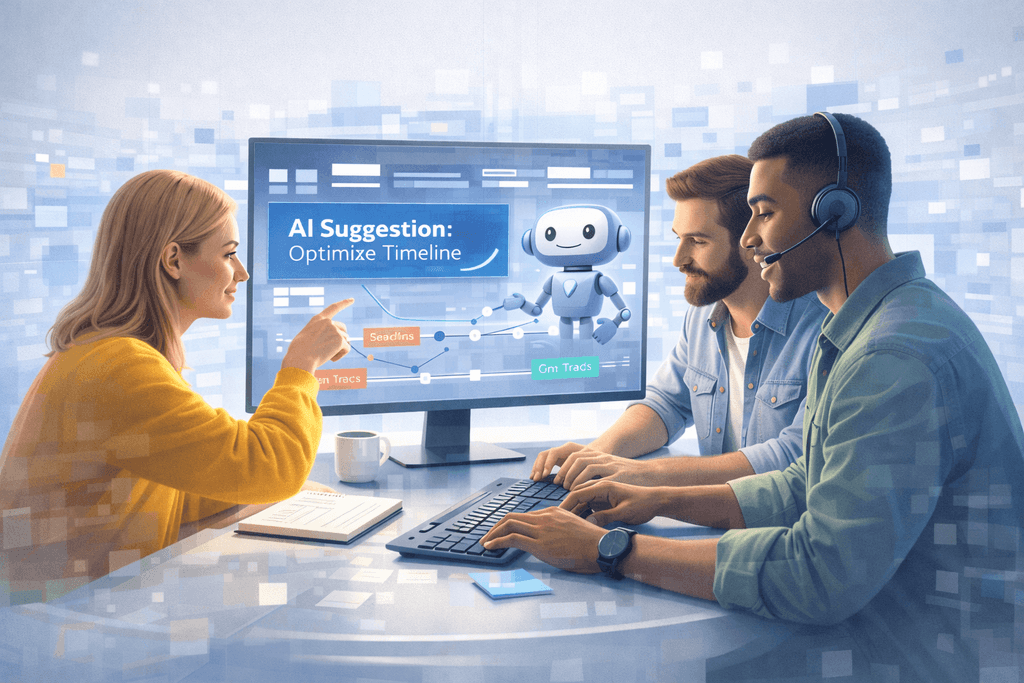
Intelligent planning has become one of the most noticeable changes over the past year.
Modern systems:
- build realistic schedules based on real data
- account for complex dependencies between phases
- analyze resource availability in real time
- automatically adapt plans to changes
Instead of static documents, companies gain a living planning system that evolves together with the project
Expert Perspective from QPM
In my experience, over the past year, AI has stopped being an experiment and has become the foundation of team management. At QPM, we focus on intelligent planning rather than manual control—exactly what businesses need today. This approach is increasingly being adopted by companies of all sizes.
What This Means for Companies
Businesses that integrate AI-powered productivity tools into their operating model gain significant advantages:
- predictable outcomes and timelines
- scalable processes without chaos
- reduced operational costs
- higher team productivity
Those who continue to use AI only for isolated tasks gradually lose their competitive advantage.
The Future: AI as an Active Participant in Processes
The next stage of development is autonomous AI agents capable of managing parts of work processes.
They will be able to:
- coordinate complex projects
- analyze risks in real time
- propose optimal solutions
- automatically manage resources
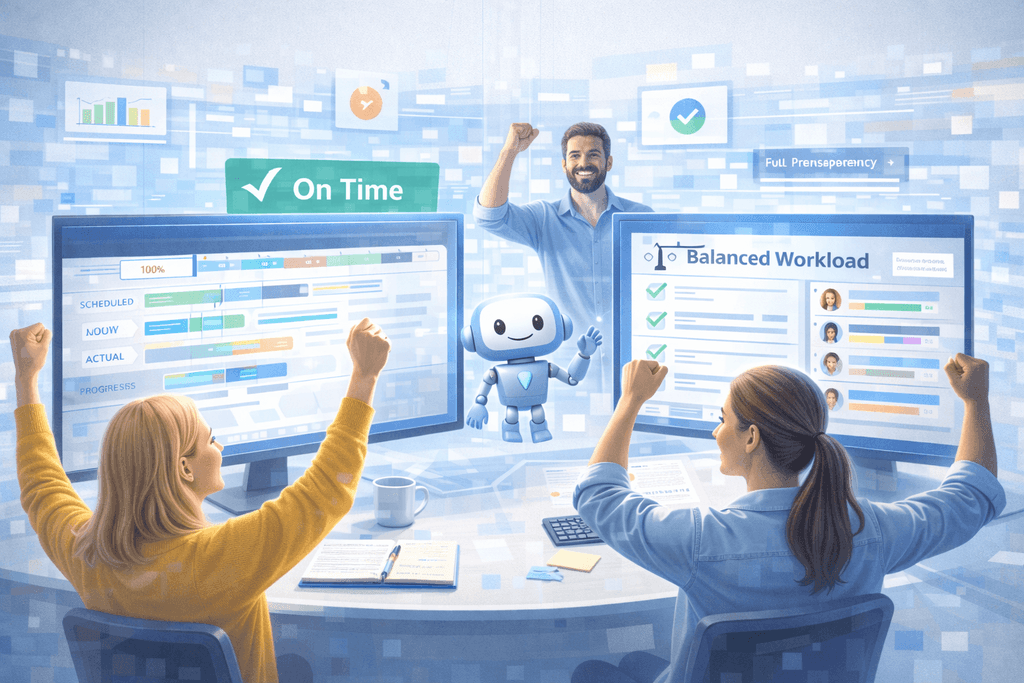
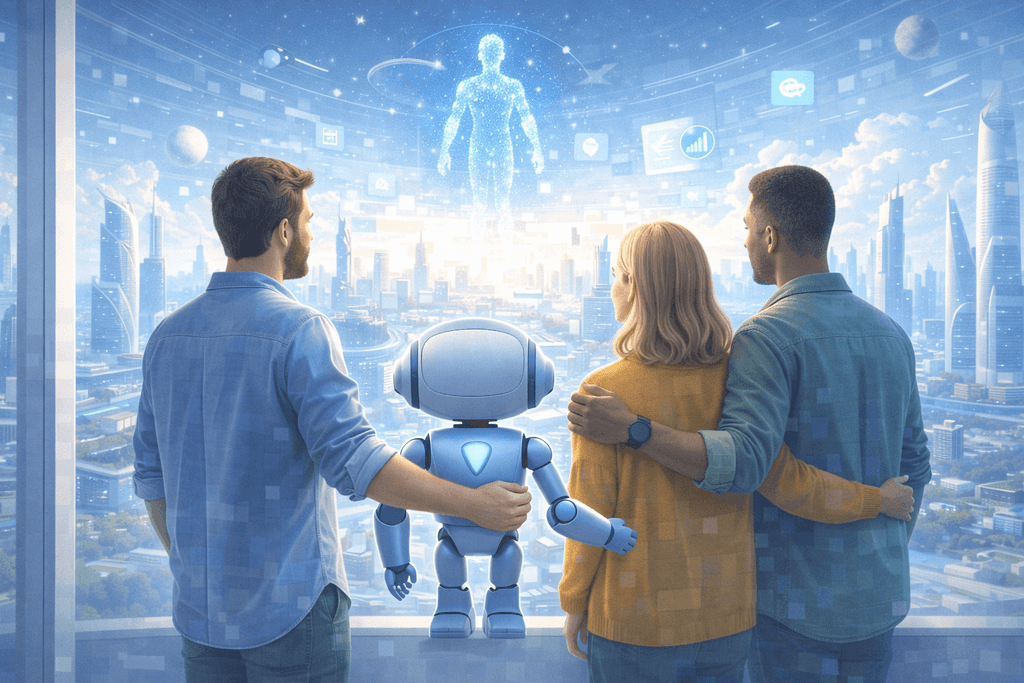
AI is no longer just a tool—it is becoming a digital partner for the team.
Conclusion
Over the past year, artificial intelligence has moved from experiments to becoming a fundamental part of work management.
AI has shifted:
- from isolated tools to systemic processes
- from manual control to intelligent planning
- from reactive management to predictable outcomes
AI in work management has become the new standard for efficiency in modern teams. Companies that adopt AI today are already shaping the future of work.