How to Build an Effective Project Management Process from Scratch: A Startup Guide


Introduction
In the dynamic world of startups, where time and resources are limited, effective project management becomes a crucial success factor. When the team is small, every day and every task matters. The sooner you establish a straightforward project workflow, the higher your chances of reaching your goals.
In this article, you’ll learn how to build a project management system from scratch, avoid common mistakes, and organize your work so that every team member knows what to do, when, and why.
What Is Project Management and Why Startups Need It
Project management is the process of planning, organizing, executing, and monitoring tasks to achieve specific goals within a defined timeframe.
For a startup, this means:
- Transparent distribution of responsibilities
- Synchronized teamwork
- Meeting deadlines and objectives
- Optimal use of resources
A well-structured project management process lays the foundation for scaling and sustainable business growth.

Building a Project Workflow from Scratch: Step by Step
1. Define a Clear Goal
Your goal should be specific, clear, and achievable. Don’t just say “launch the product,” say something like “develop an MVP of the app with core functionality by April 1.”2. Assign Roles Within the Team
Even in a small startup, everyone should know their area of responsibility:- Who sets the tasks
- Who executes them
- Who reviews the results
- Who monitors deadlines
This builds trust, reduces chaos, and speeds up the workflow.
3. Choose a Work Methodology
Startups benefit most from flexible approaches with short planning cycles. You can organize your work in iterations, focusing on key product features and adapting quickly to change.QPM fully supports flexible project workflows, allowing your team to work using Kanban, sprints, or hybrid formats. You choose the method that best fits your team.
4. Break the Project Down into Tasks
Don’t try to do everything at once. Divide the project into logical stages and tasks. Each task should be:- Specific
- Achievable within a set timeframe
- Linked to a goal
With QPM, you can quickly create tasks, assign team members, set deadlines and priorities, add comments, and attach files. The system automatically shows the status of each task in a user-friendly interface.
5. Establish a Daily Rhythm
Short daily check-ins (even 10 minutes) help the team stay in sync. But it’s even better when all the information is in one place.In QPM, your team sees all progress without extra chats or meetings: tasks, priorities, and deadlines are updated in real time.
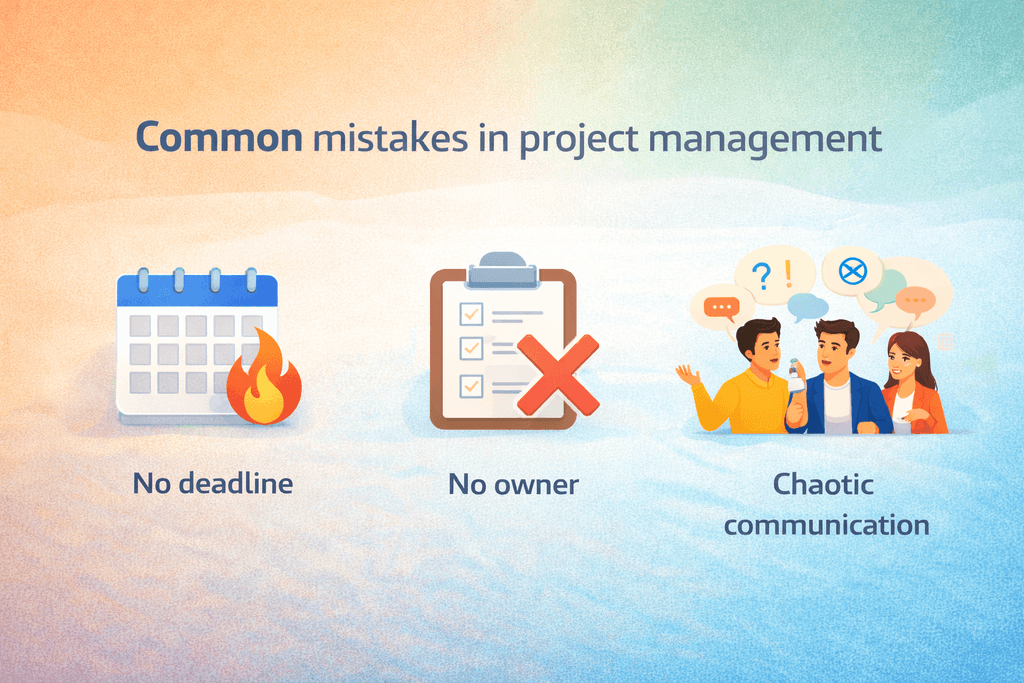
Common Mistakes in Project Management
Lack of Prioritization
Trying to do everything at once often leads to nothing being done well. In QPM, each task is assigned a weight to help with prioritization.
Too Many Communication Channels
When discussions happen across messengers, documents, emails, and spreadsheets simultaneously, information inevitably gets lost. QPM enables communication directly within task comments.
No Assigned Owner
If a task is “floating” without a responsible person, it will either be delayed or never completed. Assigning an owner in QPM takes just one click.
Lack of Reporting
To measure effectiveness, you need visibility into results. QPM provides real-time transparency into project progress, task completion, and team workload.
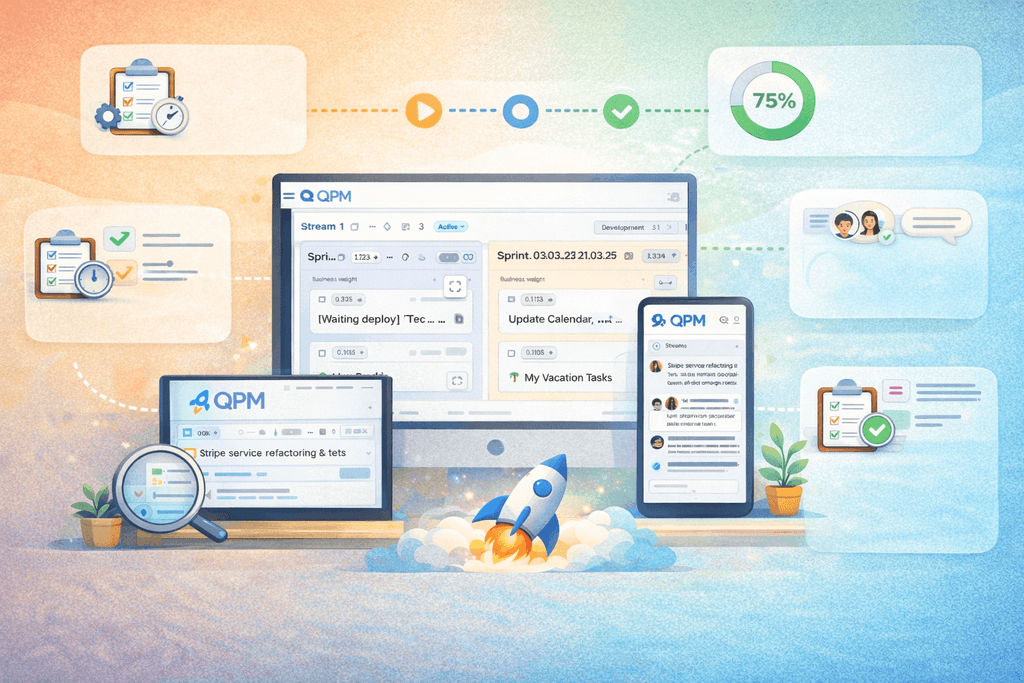
How QPM Helps You Build an Effective Project Management Process
The QPM platform is explicitly designed for teams like yours — flexible, fast, and focused on results.
h3 QPM allows you to:
- Create, structure, and assign tasks in seconds
- Visually monitor project status
- Communicate directly within tasks
- Track progress without unnecessary bureaucracy
- Analyze team performance
All in one intuitive interface — no complex setup, no extra clutter.
Real-World Example: Launching an MVP in a Startup
A young team of five decided to create an app for internal communications in small businesses. Their initial plan was to develop the basic functionality within four weeks.
What they did with QPM:
- Created a stream, defined objects, broke the work into iterations, and set up tasks
- The system automatically assigned team members based on their skill level and determined realistic iteration completion timeframes
- Communicated through comments inside the system
- Reviewed progress daily using the Relation Diagram, Task Board, and Team Monitoring
The result:
- All tasks completed on time
- Minimal delays or task duplication
- The team saved over 10 hours per week on coordination

Conclusion
Startups can’t afford chaos. Every mistake is costly, and every day counts. That’s why it’s crucial to invest in a structured project management system from day one.
You don’t need a complicated setup. Start with the basics:
- Define your goal
- Break it down into tasks
- Assign responsibilities
- Track progress
And most importantly — use a tool that simplifies, not complicates, your team’s workflow.
Get started with QPM today
QPM is everything you need to make your startup run like a well-oiled machine.
Try QPM for free and build a project workflow that works for you.