Hidden Dependencies: How to Stay in Control of Your Project

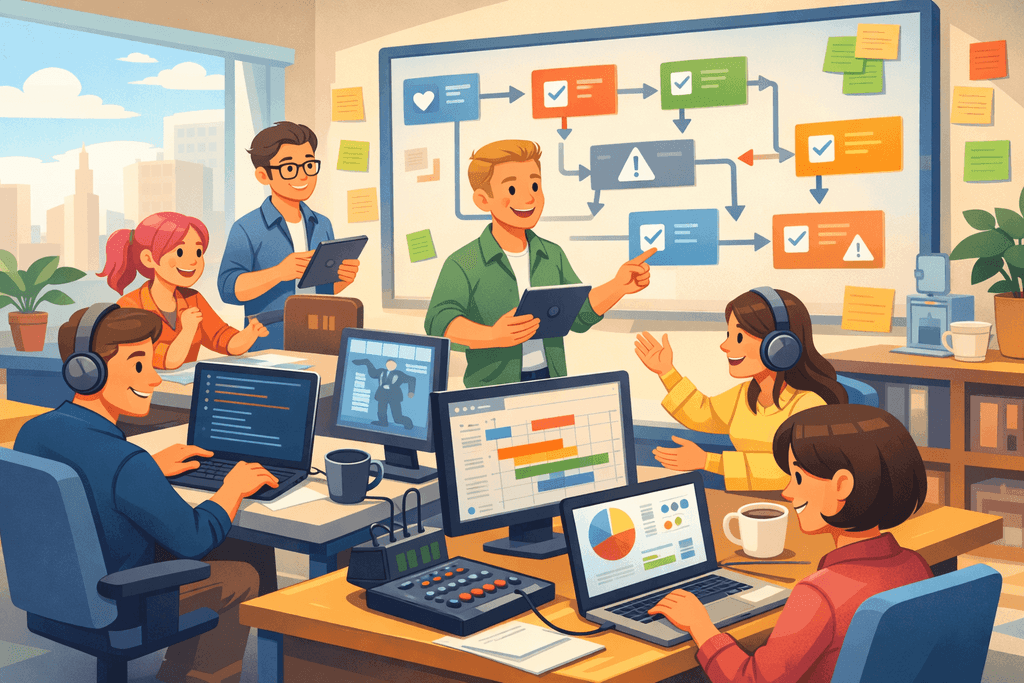
In many teams, it feels like everything is working: tasks are moving, people are busy, and meetings happen regularly. Yet deadlines keep slipping, and results come later than expected. This is one of the least obvious paradoxes in project management. The problem is usually not the complexity of the tasks or the team's lack of effort. More often, the real issue lies in dependencies between tasks that remain invisible and unmanaged within the process.
Why Dependencies Get Out of Control
In reality, many task connections are not formally defined. They exist in people’s heads, in messages, and in informal agreements. Because of this, teams only see their part of the work, without understanding how it impacts the overall process. As a result, project delays start to appear, often without a clear reason at first glance. Small issues accumulate over time and eventually turn into systemic risks. This is how project risks emerge: they become visible only when they begin to affect deadlines.
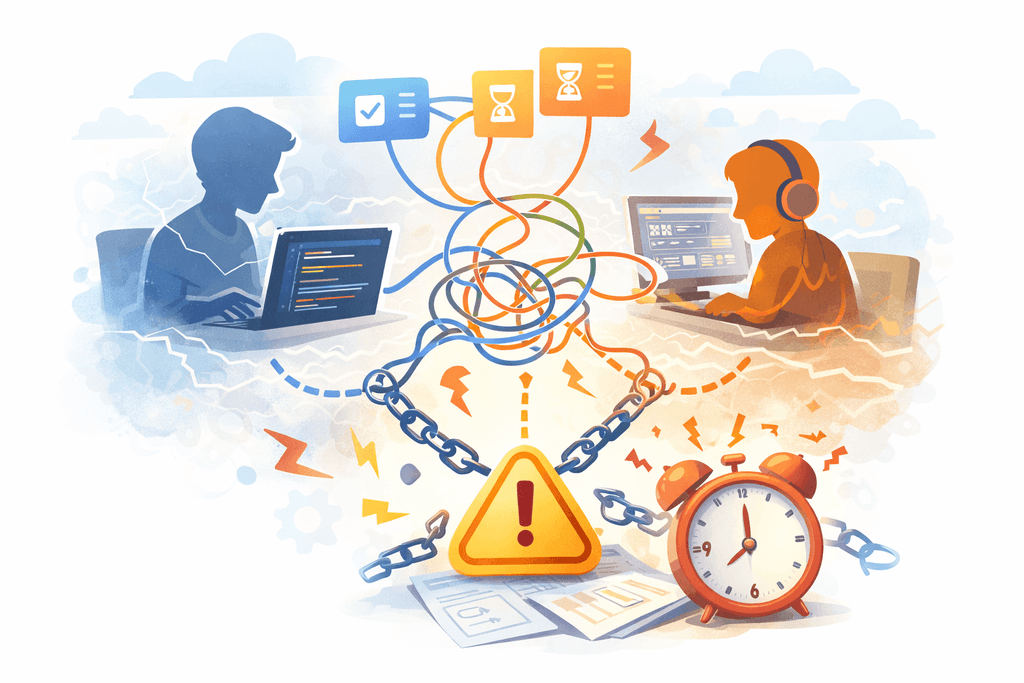
Case Study: How a Game Development Team Lost Time Due to Dependencies — and How QPM Helped Fix It
One of the game development teams we worked with struggled for a long time to understand why deadlines kept slipping. From the outside, everything looked fine: the team was working, tasks were being completed, and project planning was happening regularly. Yet timelines kept shifting. After taking a deeper look at the process, it became clear that the root cause was task dependencies that weren’t visible in the system.
Multiple specialists were working on the project simultaneously — developers, animators, game designers, and sound engineers. Their work was tightly interconnected. Code depended on assets, assets depended on sound, and sound depended on game design configurations. But these connections existed only between people, not in any task management system.
At one point, a developer was supposed to start integrating character animations, but the animator was still discussing design details in Slack. The developer waited for a while, then switched to another task. When they came back, they had to spend time restoring context. It seemed like a small issue. But situations like this happened constantly — and over time, they gradually slowed down the entire team.
What has changed after implementing QPM
After switching to QPM, the key change was process transparency. For the first time, the team could clearly see how tasks were actually interconnected. It became obvious what was blocking progress, what was affecting timelines, and where bottlenecks were occurring. If a task remained in the Active status longer than expected, it immediately drew the team’s attention. More importantly, it was clear why it was happening. For example, it was easy to see that an integration was delayed not because of the developer but because of missing assets. This not only allowed the team to react faster, but also improved overall project control. Instead of simply responding to problems, the team began to anticipate them.
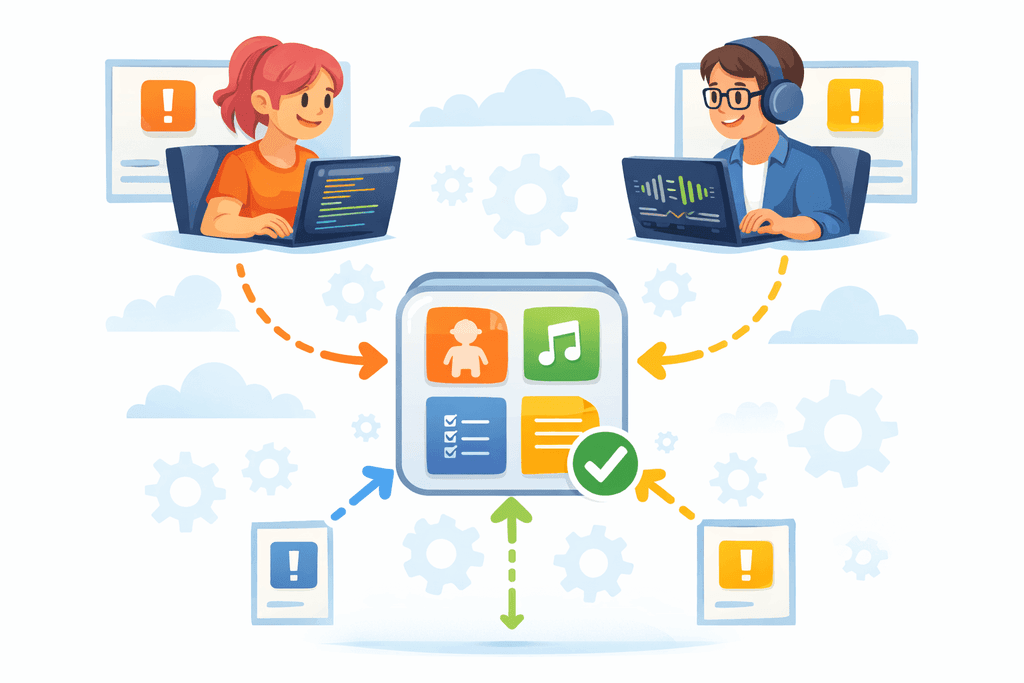
Scope Box: when tasks are fully ready for execution
Another important change concerned task preparation. Previously, developers often received work that wasn’t fully ready. Something was always missing—assets, audio, or a clear description of the logic. As a result, the workflow was constantly interrupted. With QPM, the team adopted the Scope Box principle. The core idea is not just about task readiness, but about structuring the iteration around clear business goals that must be fully achieved. Scope Box defines the complete scope of work required to deliver those goals. Only the tasks that collectively produce a finished outcome are included. This means that by the end of the iteration, the team doesn’t just “complete tasks” — it actually delivers the intended business value. It may sound obvious, but in practice, the opposite often happens: the iteration is finished, tasks are done, yet the actual goal remains unmet. When the scope is built around complete outcomes, the process becomes continuous and predictable. Constant clarifications, rework, and unnecessary discussions disappear. As a result, the team operates at a steady pace, and different parts of the work — code, assets, and audio — come together into a single, finished result, rather than a set of disconnected completed tasks.
How to take back control of the process
The core idea here is simple: you can’t manage what you can’t see. That’s why QPM focuses not just on tasks, but on the structure of relationships between them.
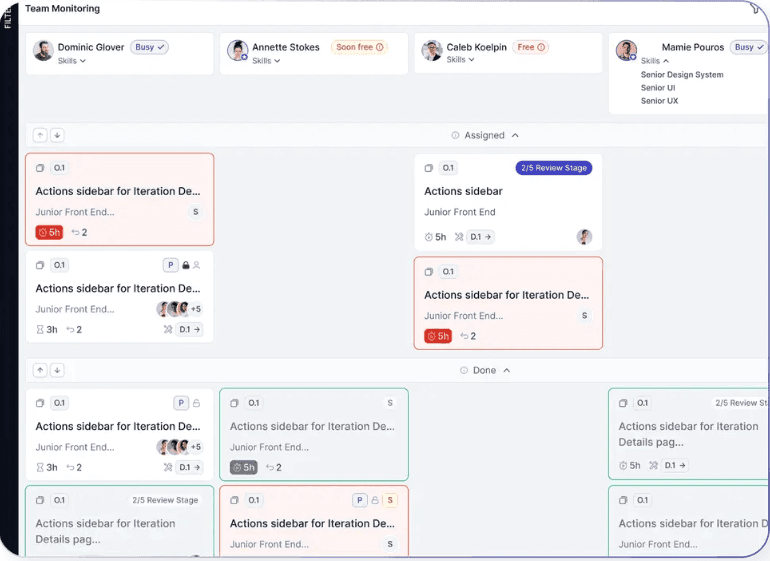
Team Monitoring makes it easy to understand what’s happening in the team right now — who is overloaded, where delays are occurring, and where work has stalled.
Relations Diagram reflects the structure of the process: which streams exist, which iterations they include, what objectives are defined, and what dependencies exist between them. It shows how everything is connected.
Gantt Diagram, in turn, provides a time-based model of execution within iterations. It shows what is being developed, where risks arise, and how tasks interact over time. This is where the critical path becomes visible: a manager can identify how even a small task — for example, sound approval — can block the release of an entire feature, because it sits on the critical path and affects other tasks.
Together, these tools provide something teams often lack: a holistic understanding of the process.
Conclusion
Hidden dependencies are among the main reasons teams lose control of a project. They don’t look like a problem at the start. But over time, they accumulate and begin to affect timelines, workload, and overall outcomes. QPM addresses this issue not through additional control, but through transparency. When task relationships become visible, the way a team works changes. There’s less chaos, fewer assumptions, and significantly more predictability. And that’s what makes it possible not just to complete tasks, but to truly manage a project.