Why AI in Project Management Still Doesn’t Solve the Core Problem of Projects

AI is Everywhere in Project Management
Artificial intelligence is rapidly transforming the field of project management. Today, nearly every major platform – from Jira and Monday to ClickUp and Asana – is introducing AI assistants, AI agents, workflow automation, intelligent recommendations, automatic summaries, and predictive capabilities.
AI can already generate tasks, summarize meetings, answer project-related questions, automate repetitive operations, and help teams process information much faster than before. The market presents this as the next stage in the evolution of project management — and to a large extent, that is true.
But despite all this progress, projects still miss deadlines, teams remain overloaded, and execution continues to be unpredictable.
And this creates an uncomfortable question: if AI in project management is advancing so quickly, why do projects continue to fail in the same ways they always have?
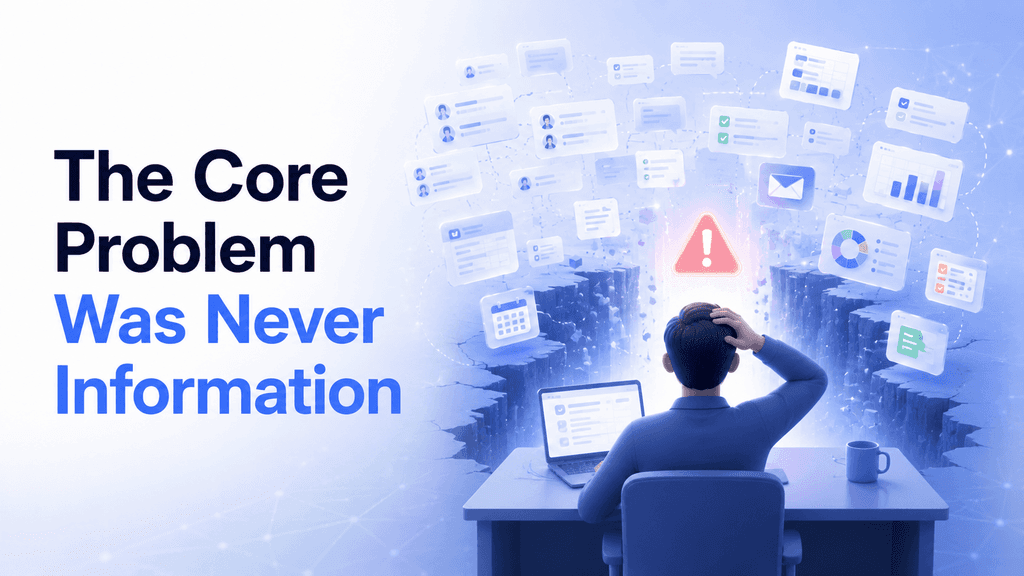
The Core Problem Was Never Information
Most modern AI tools are designed to accelerate information handling. They reduce administrative overhead, speed up communication, simplify reporting, summarize discussions, and help teams find information faster.
These improvements are genuinely useful. They save time and reduce operational chaos. But projects rarely collapse because someone failed to write a status update or generate a meeting summary. Projects fail because execution itself becomes unstable.
A project plan may look perfectly logical on the surface while already being disconnected from reality. One specialist may silently become overloaded across multiple initiatives. A delayed review can block an entire dependency chain. Priorities may shift faster than the system can adapt. Teams continue moving tasks through workflows while execution risks quietly accumulate beneath the surface.
The core problem of projects was never simply information management. The real problem is execution instability.
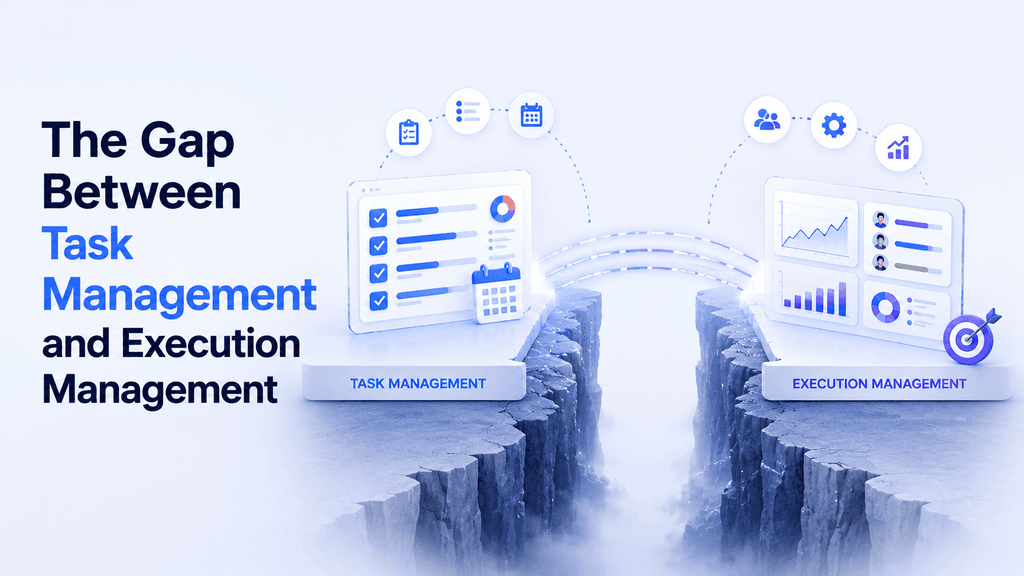
The Gap Between Task Management and Execution Management
Most project management systems are still built around task administration: creating tasks, updating statuses, organizing boards, automating notifications, and generating reports. Even most AI capabilities are layered on top of this same logic.
But execution complexity exists much deeper.
It appears when multiple teams compete for the same people, when overloaded specialists create invisible queues, when one delayed review blocks an entire chain of dependencies, and when timelines stop reflecting the team’s actual capacity.
In real projects, tasks do not simply depend on one another — they compete for the same resources. And this is where many execution systems begin to silently break down long before delays become visible.
A project dashboard may still look stable while the same architect is already overloaded across several strategic initiatives. A reviewer may become a bottleneck for dozens of tasks across multiple teams. A critical engineer may appear “available” within one project while already operating beyond sustainable capacity somewhere else in the organization. The timeline may still appear healthy. But the execution system is already unstable.
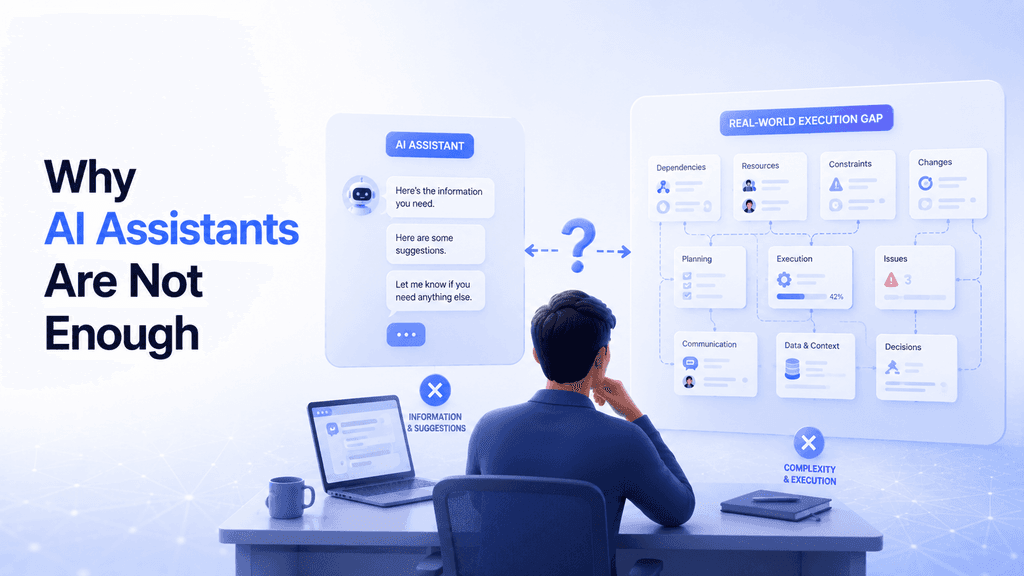
Why AI assistants are not enough
AI assistants are becoming excellent operational helpers. They can summarize discussions, recommend actions, analyze data, automate processes, and accelerate communication between teams.
But project execution requires far more complex capabilities than simply processing information.
Execution requires:
- continuous adaptation of plans,
- workload balancing,
- dependency coordination,
- realistic work allocation,
- and real-time visibility into execution health.
This is where the limitation of most modern AI systems becomes visible. AI can explain a project. AI can summarize a project. AI can organize a project. But managing execution is a far more difficult challenge.
Without adaptive execution management, AI often becomes just another interface layered on top of the same planning problems companies have always had.
The problem is not that teams lack information. The problem is that most systems still cannot dynamically adapt execution when reality changes. And reality is always changing.
The invisible resource conflict
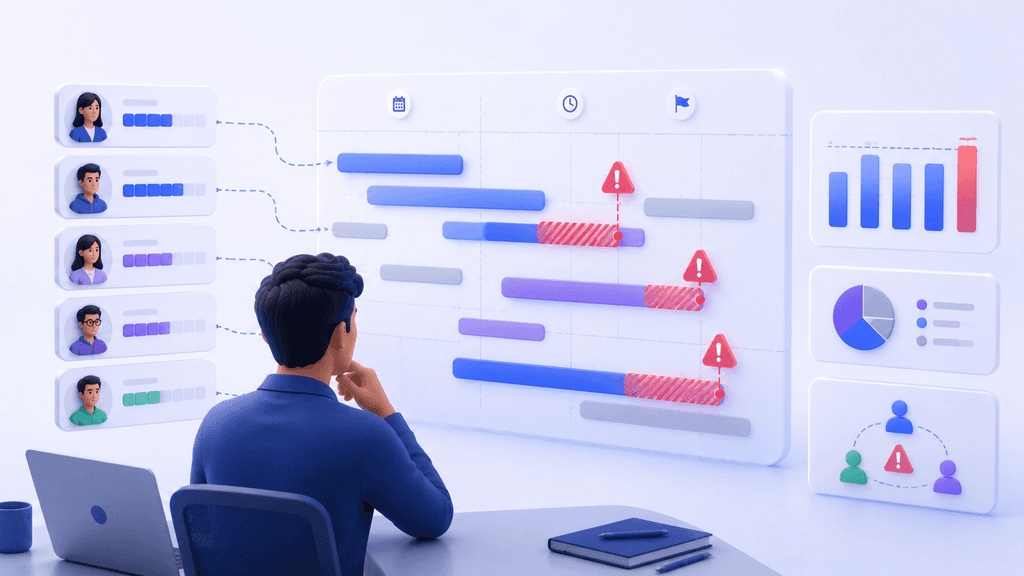
One of the most hidden problems in modern project management is invisible resource conflict. Most project plans assume that if task dependencies are structured correctly, execution will somehow “work itself out.” But reality works very differently.
The same frontend architect may simultaneously participate in three parallel initiatives. One reviewer may be responsible for approvals across multiple workstreams. A critical specialist may appear “available” inside one timeline while already operating beyond sustainable capacity somewhere else in the organization.
And all of this is often invisible to traditional planning systems. The timeline may still be green. The Gantt chart may still look realistic. The sprint board may still appear to be moving forward. But beneath the surface, execution pressure is already growing.
This is why delays often appear “unexpectedly,” even though the system became unstable long before deadlines started slipping. Tasks do not simply depend on one another. They compete for the same people.
Why managers still spend hours “trying to understand the situation”
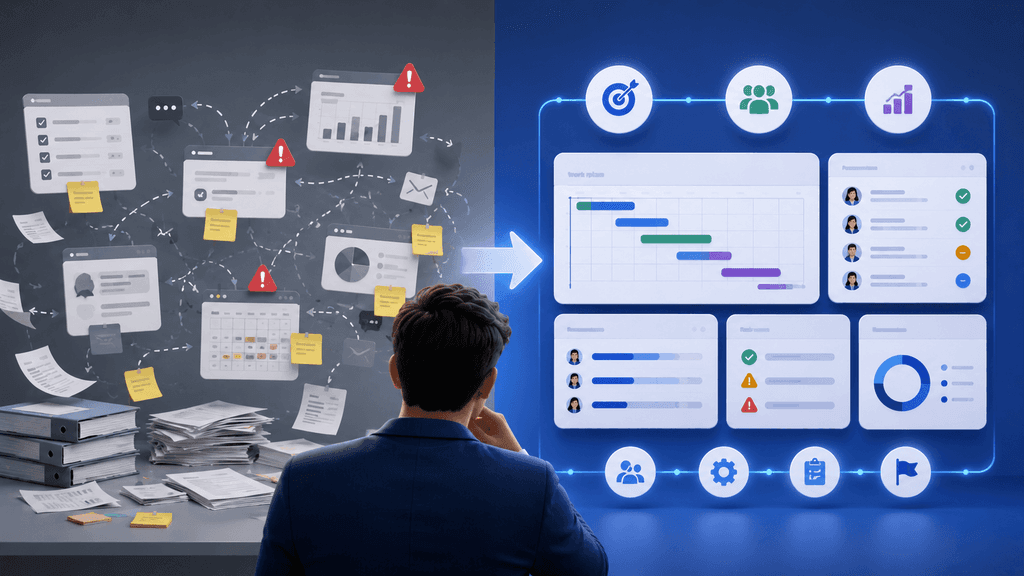
Despite modern dashboards, AI assistants, and workflow automation, many managers still spend enormous amounts of time trying to understand what is actually happening inside execution.
They move between meetings, chats, spreadsheets, reports, and status updates, manually reconstructing the real state of project execution.
This happens because most systems provide task visibility, not execution visibility. Knowing that work exists does not mean understanding whether the system can realistically complete it on time.
A task may technically be “In Progress” while already being blocked by overloaded reviewers, hidden queues, dependency conflicts, or resource instability somewhere inside the workflow.
As a result, companies continue to rely heavily on daily meetings, manual coordination, manager intuition, and constant clarification just to keep execution stable.
The system successfully tracks work. But managers still have to manually “understand the situation.”

Moving from Task Tracking to Execution Coordination
This is where project management begins to move beyond traditional task tracking. The next stage in the evolution of project management is no longer simply smarter task administration powered by AI. It is execution coordination.
Instead of using AI as an additional assistant layered on top of static planning, modern systems must be able to continuously adapt execution as priorities, workloads, dependencies, and business conditions change.
The problem is no longer simply organizing work. The problem is maintaining execution stability under real-world conditions.
This requires systems capable of providing:
- adaptive planning,
- intelligent work allocation,
- resource-aware coordination,
- dependency management,
- and real-time execution visibility.
How QPM Approaches This Problem
At QPM, we look at project management through the lens of execution stability rather than static task administration.
Instead of simply organizing work, the system is built around continuous execution adaptation through Autoplanning, Autoassignment, and Team Monitoring.
Autoplanning
Autoplanning is built around one key principle: a plan must remain executable even when reality changes.
Most timelines become outdated almost immediately after they are created because they are built as static assumptions. But real execution is constantly changing. Priorities shift, workloads increase, dependencies evolve, specialists become overloaded, and execution conditions continuously adapt.
QPM continuously recalculates execution logic based on dependencies, priorities, workloads, available team capacity, and execution constraints.
The goal is not simply to create a project plan. The goal is to maintain a plan that continues to reflect execution reality.
Autoassignment
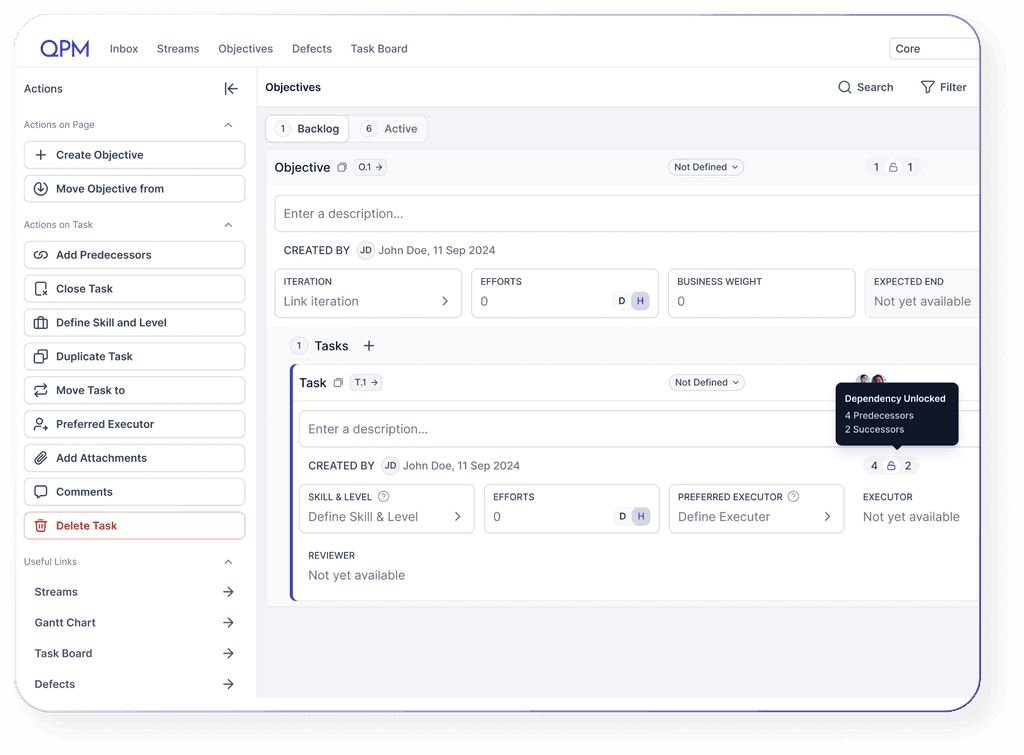
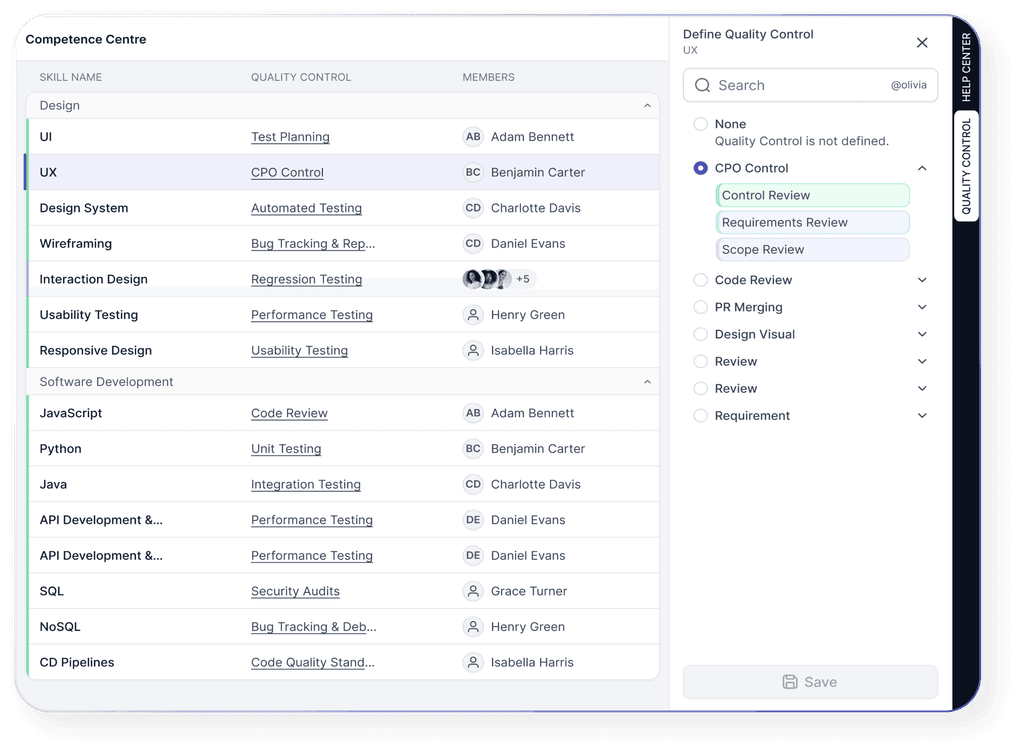
Work assignment is not simply about choosing an available person. Realistic execution depends on skills, competency levels, current workload, specialist availability throughout the entire sprint execution period, reviewer availability, priorities, dependencies, and the impact each assignment has on the overall execution system.
QPM treats task assignment as an execution coordination problem rather than a manual management activity. The goal is not to assign tasks faster. The goal is to assign them realistically so project delivery timelines do not collapse.
Team Monitoring
Even strong planning becomes unstable when teams lose visibility into execution health.
One of the major hidden problems in modern project execution is that overloads, bottlenecks, blocked work, and execution slowdowns usually become visible too late — only after deadlines already begin slipping.
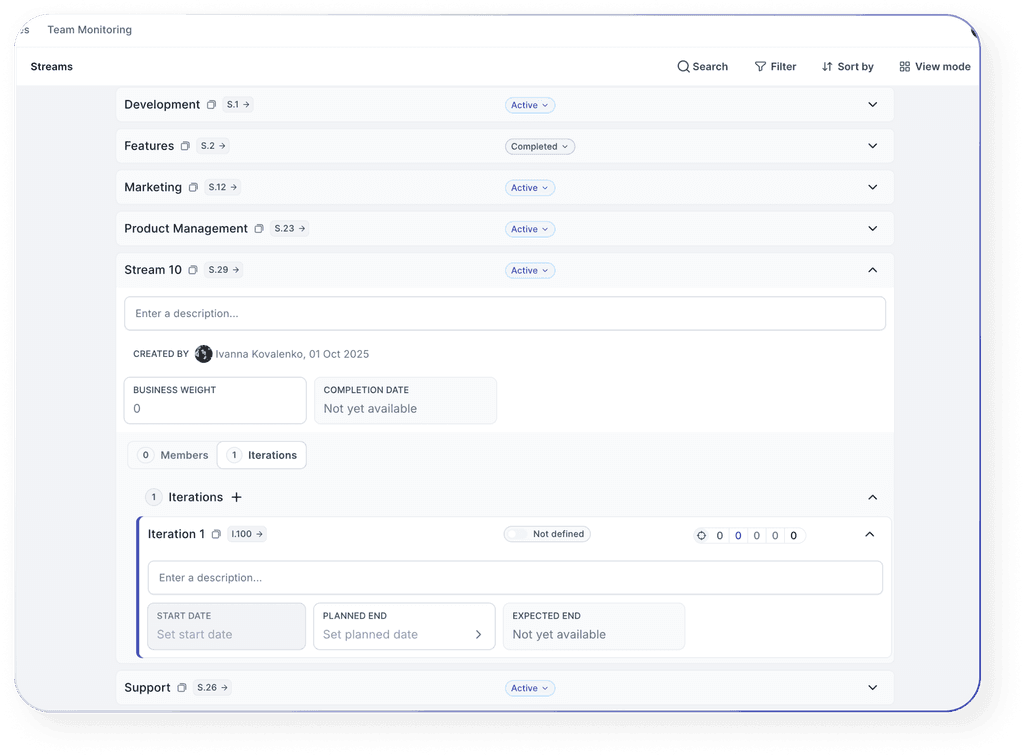
Team Monitoring creates real-time visibility into project execution. Instead of relying only on meetings, manual status updates, or spreadsheets, teams can immediately see overloads, hidden task queues, bottlenecks, and delay risks. This allows problems to be identified before they begin affecting deadlines, teams, and the entire project delivery process.
This allows managers to spend less time manually reconstructing reality and more time making strategic decisions.
The Future of Project Management
AI is already transforming project management. But the industry is still in the early stages of this transformation.
Today, most AI systems optimize communication, reporting, and information processing. The next generation of project management systems will need to optimize execution itself.
This means:
- adaptive planning instead of static timelines,
- intelligent work allocation instead of manual coordination,
- resource-aware execution management instead of overly optimistic planning,
- and real-time execution visibility instead of delayed reporting.
The future of project management will most likely depend not on which platform generates better summaries or automates notifications more effectively. It will depend on which systems can continuously adapt execution as reality changes.

Conclusion
Modern project management systems were largely built to help teams track work. But projects fail at the execution system level.
The real challenge of project management is not simply organizing tasks. It is maintaining a realistic, stable, and continuously adaptive execution system behind them.