Professional burnout as a business risk: how effective resource and workload management protect teams from overload

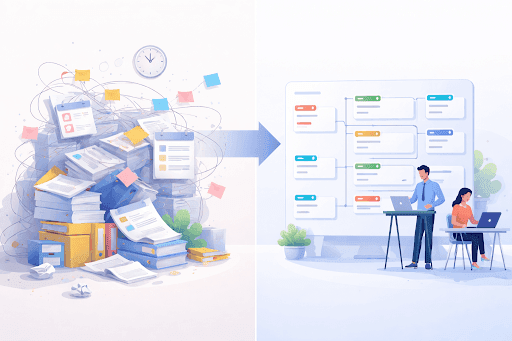
Let’s be honest: professional burnout stopped being a “soft HR topic” a long time ago. It’s an operational risk, a delivery risk, and for many companies, a direct financial risk.
Teams don’t burn out suddenly. It’s the result of months, or even years of:
- chronic overload
- chaotic workload distribution
- the absence of real workload management
- ignoring capacity planning
In project-oriented organizations, this is not a coincidence. It’s a predictable consequence of how a company plans, allocates, and controls its resources. That’s why project resource management and structured team resource planning are becoming critical disciplines. And modern resource management software makes it possible to see the actual workload and prevent burnout already at the planning stage.
Burnout in a business context, not just a psychological one
ICD-11 defines burnout as the result of chronic workplace stress that an organization has failed to manage systematically. It consists of three key components:
- persistent exhaustion
- detachment or cynicism toward work
- reduced effectiveness
This is not about someone being “too weak” or “just needing a rest.” Burnout is directly linked to business outcomes:
- declining productivity
- project failures
- increased employee turnover
- loss of expertise
- higher costs for hiring and replacement
Simply put, burnout directly reduces a company’s capability. And in most cases, its root cause is poor resource management — not a lack of motivation.

How poor resource planning and workload management lead to team burnout
Burnout emerges where a company consistently operates above its realistically available capacity.
1️. Chronic capacity deficit
Companies often take on more work than the team is capable of delivering and turn “heroic sprints” into a norm. This is a classic case where capacity planning either doesn’t exist or is purely formal.
2️. Non-transparent workload in a multi-project environment
On paper, people appear “available”. In reality, they:
- participate in several projects at once
- handle hidden “invisible work”
- constantly firefight
Without transparent workload management, the same key people are continuously burning out.
3️. Blurred roles and a culture of “permanent heroes”
When one person simultaneously:
- executes
- reviews
- makes decisions
- communicates with stakeholders
— this is a direct road to burnout and failed delivery.
This is not a “human factor”. It is a defect of the resource management system.
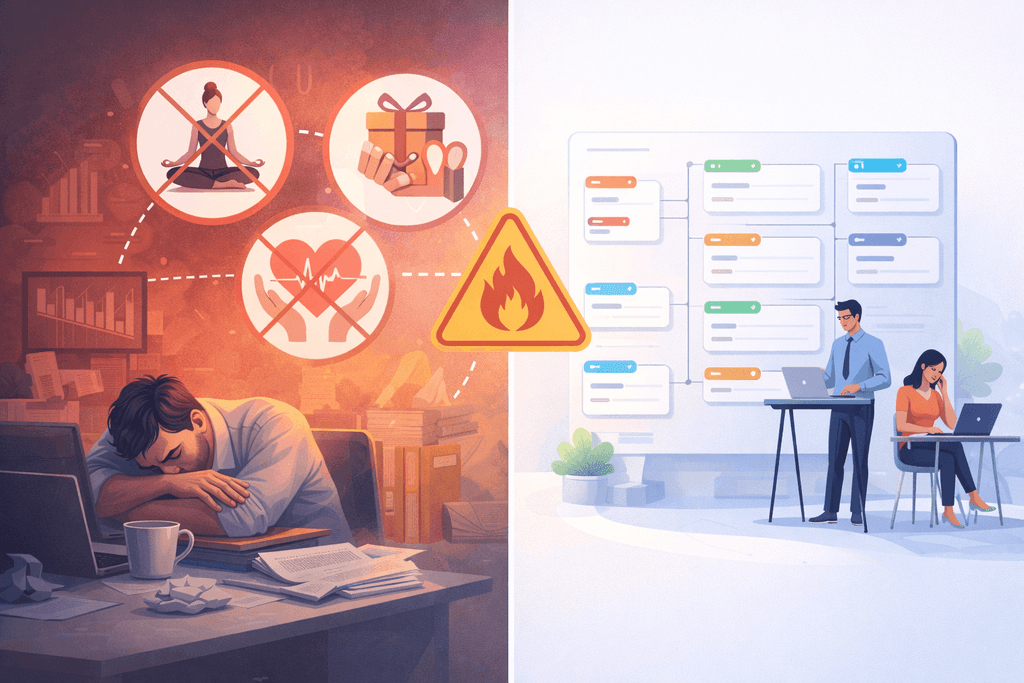
Why wellbeing programs don’t cure structural burnout
Popular solutions such as meditation, “care initiatives,” and corporate perks are pleasant — but useless if an organization consistently plans people in the red zone.
Burnout is mostly caused by work design, not a lack of mindfulness. So before investing in “wellbeing,” it’s essential to fix:
- resource management
- workload management
- capacity planning
Resource management and workload management as tools for preventing team burnout
Modern project resource management is not just about “assigning a person to a task.” It’s about realistic resource planning, workload control, risk forecasting, and stable delivery.
Market practice shows that:
- balanced workload management reduces burnout
- capacity planning ensures predictable delivery
- transparent resource planning in IT reduces stress
- mature resource management decreases employee turnover
When expectations are clear, workload is fair, and the team doesn’t live in constant “firefighting mode,” the risk of burnout drops dramatically.
What effective project resource management looks like in practice
Full visibility of workload
Good resource management software makes it possible to see people’s involvement across all projects, their roles, availability, and real constraints. This immediately reduces accidental overload.
Realistic capacity planning
Mature companies do not plan for 100% utilization. The norm is 70–80% to leave space for unexpected tasks, support work, and learning. This is not “inefficiency.” This is risk management.
Clear role distribution
Burnout is often caused by situations where people carry several critical roles at the same time. Resource planning eliminates this.
Early overload signals
High-quality tools allow you to see overloaded people, critical roles, resource conflicts, and risk trends — not just problems after they’ve already happened.
How QPM helps prevent burnout through resource management
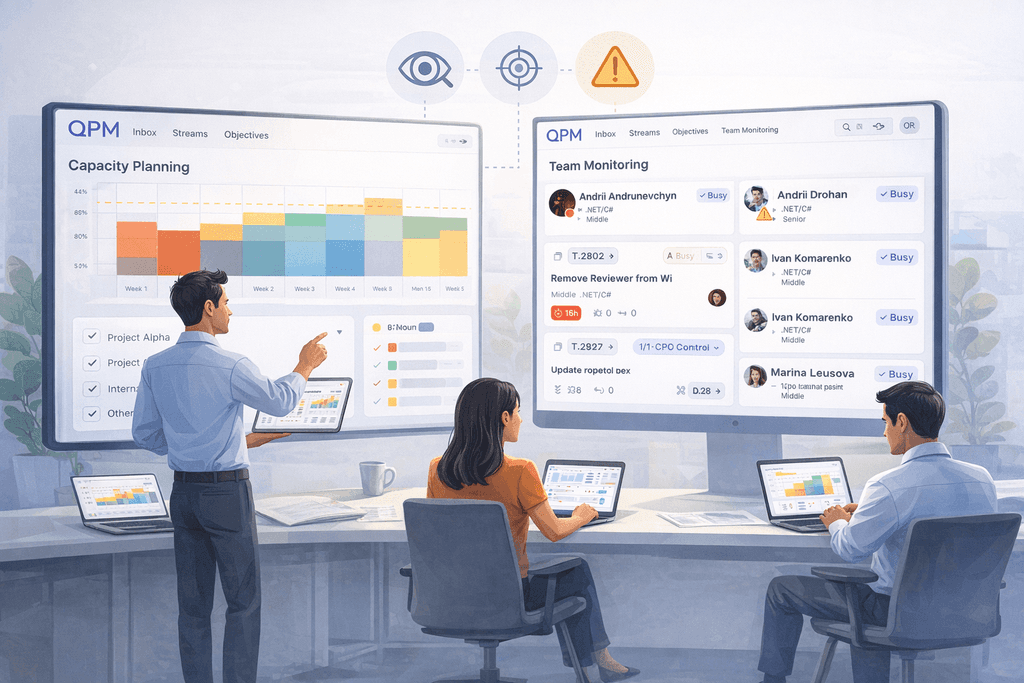
✔ Real visibility of workload
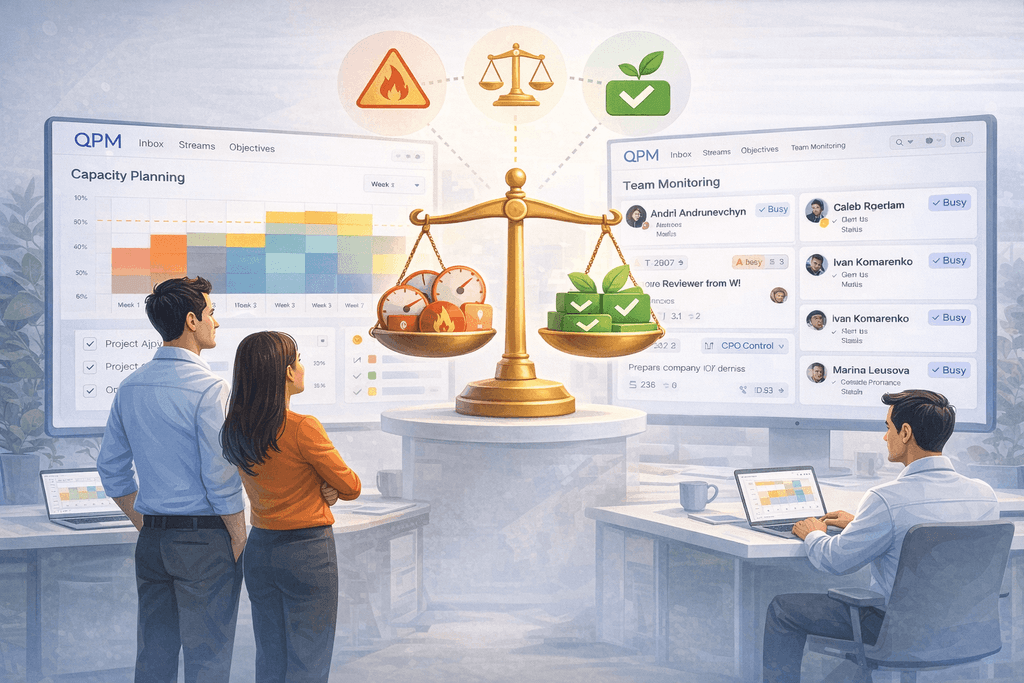
QPM provides a full overview of each employee’s involvement in tasks and projects, taking into account already assigned work, vacations, sick leave, and other constraints. You assign tasks only to those who are truly available, reducing the risk of overload. This is ideal for multi-project and multi-team environments.✔ Cross-team and multi-project planning
QPM is designed for organizations where people are engaged in several initiatives in parallel. You see workload not only within a single project, but across the entire company — and can reallocate resources between teams and streams without chaos.
✔ Overload control and early warnings
The system highlights risks: overutilization, critical roles, and potential bottlenecks. This allows managers to see problems before the team hits the red zone, directly reducing the risk of burnout and missed deadlines.That’s why Resource Management in QPM not only helps plan work more effectively, but also directly reduces the risk of team burnout, stabilizes delivery, and lowers business risks.
How Team Monitoring in QPM helps prevent burnout even more effectively
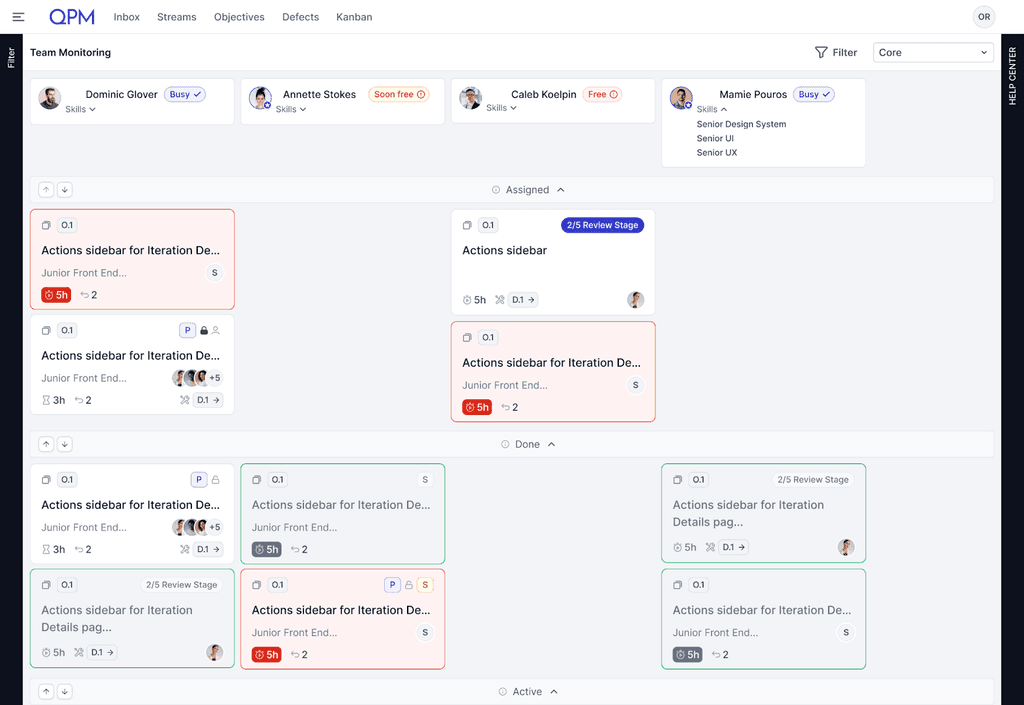
If Resource Management in QPM helps plan workload correctly, Team Monitoring allows you to control the real situation “in the field” — during execution.
✔ All team activity on one screen
Managers, team leads, and operations leaders can see who is working on what, where overload is occurring, where delays arise, and where “quiet zones” exist where work is slipping.✔ Real-time workload visibility
The system shows where people are overloaded, where there is available capacity, and where someone is “falling out” of the process. This allows you to react not after the fact, but while there’s still time to fix the situation without burnout.
✔ Early detection of risks and burnout drivers
Team Monitoring helps HR, People Ops, and leadership identify:- chronic overload
- dependency on specific people
- gaps in roles
- tasks are stuck without ownership
This directly reduces the risk of burnout and delivery failures.
✔ A balance between productivity and a healthy workload
When tasks are distributed fairly, and managers have real data, teams work more steadily, efficiency grows, and job satisfaction increases.
Leadership responsibility: tools help, but people make the decisions
Resource management software provides data, structure, and control. But the key decision is always managerial: not to keep the organization constantly in the “red zone.”
Balanced workload is a choice.
Protecting the team is a choice.
Sustainable performance is a choice.
Companies that understand this build a sustainable performance culture. Those that don’t — pay with burnout, turnover, and unmet commitments.
Quick self-check for burnout risk
- Do we actually manage resources, or do we just “dump tasks” on people?
- Do we see workload across the entire organization, not just within one project?
- Do we have “permanent heroes” who constantly compensate for systemic failures?
- Do we track overload as a trend?
- Do we treat burnout as a personal problem or as a system defect?
If several answers raised concerns, you have a structural risk. And the first line of defense is resource management, workload management, and capacity planning.
Conclusion
Burnout is not “the price of ambition.” It’s the cost of unmanaged capacity. By investing in project resource management, workload management, and capacity planning, companies:
- protect their people
- stabilize delivery
- reduce risks
- strengthen competitiveness
If you want to see how resource management software helps prevent burnout and build stable teams, it’s worth testing its capabilities in real scenarios from your organization.