Managing Deadlines in Game Development: Balancing Creativity and Delivery


Introduction
In game development, deadlines are critical — they are more than just dates on a calendar. They mark the line between a successful release and a catastrophic delay. But unlike other industries, game development is not a linear process. Creativity and technical precision are deeply intertwined, and inspiration doesn’t always follow a schedule. That’s why effective time management in the gaming industry is not just about planning — it’s about finding the right balance between creativity, productivity, and discipline.
Modern studios are increasingly choosing intelligent project management platforms that help synchronize teams, automate routine work, and prevent burnout. One such solution is QPM — a system designed specifically for game development teams, where the goal is not just to deliver on time, but to create something truly remarkable.
Why Deadlines Are a Critical Factor in Game Development
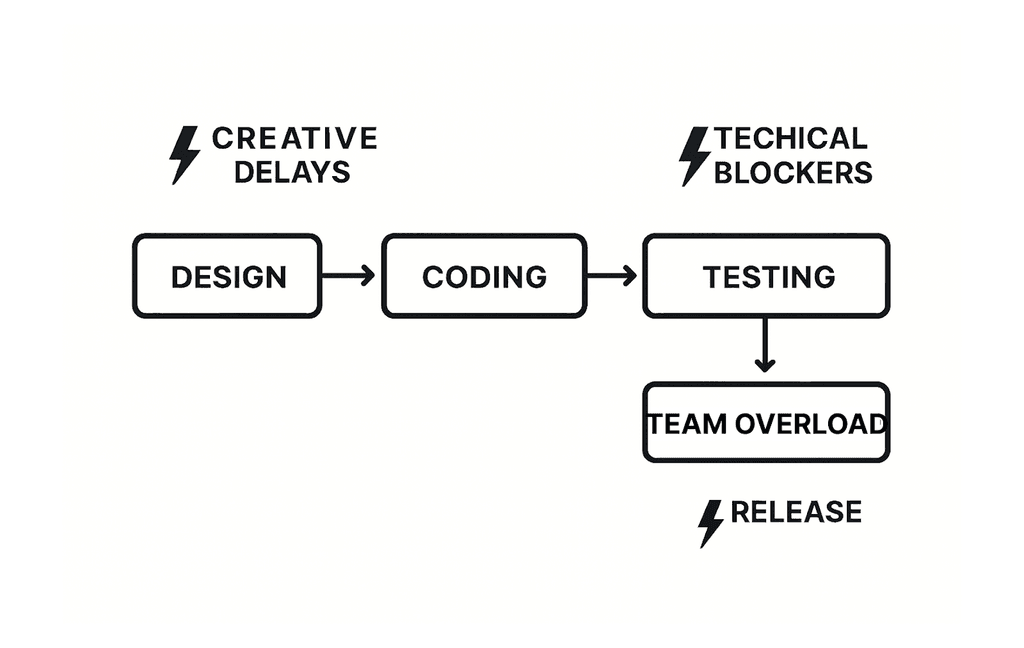
In game development, deadlines shape everything: from the studio's internal rhythm to the marketing strategy and relationships with the publisher. A delay of even a few weeks can affect the budget, release schedule, testing, or the game's promotion.
The main challenges teams face include:
Creative delays — artists or designers need more time to find the right visual solution.
Technical blockers — complex integrations or unexpected bugs.
Underestimation of workload — especially in cross-functional teams (artists, programmers, QA).
Lack of transparency — when it’s difficult to see exactly where the team is falling behind.
QPM addresses these challenges through its planning logic, combining the flexibility of Agile with the predictability of Critical Chain Project Management (CCPM).
How Creativity Complicates Planning
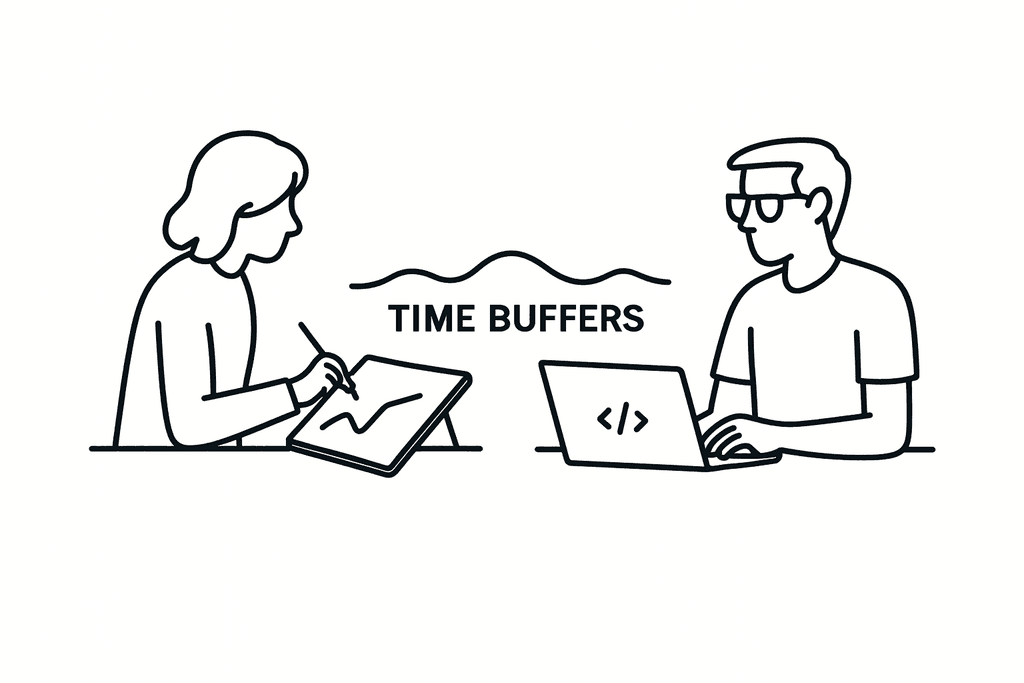
Creative work doesn’t have consistent productivity. One day can bring a breakthrough, while another leads to stagnation. When deadlines are based on rigid calculations that ignore the human factor, the risk of burnout and missed milestones increases.
This is where risk management — specifically, the Buffer Time Planning approach implemented in QPM — comes in. It allows teams to create time buffers for creative or critical tasks, giving them space for testing, experimentation, and quality assurance without jeopardizing delivery dates. It’s not just a “time reserve,” but a deliberate strategy for managing uncertainty.
Automation vs. Chaos: How QPM Helps with Deadlines
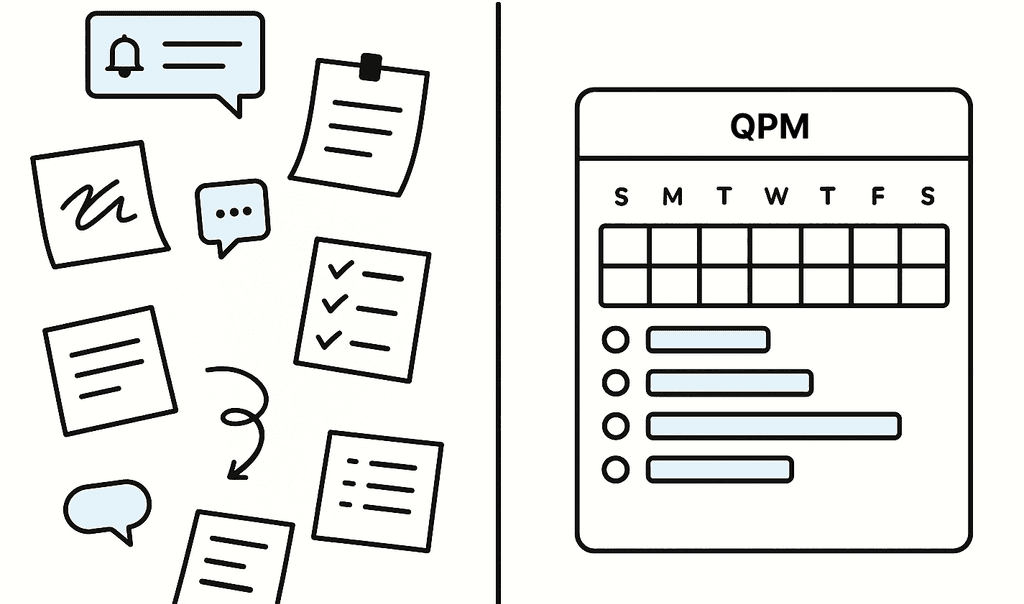
Manual planning in large game development teams often turns into a constant struggle with dozens of task trackers, messages, and spreadsheets. QPM brings everything together into one unified ecosystem.
Key features that ensure on-time delivery:
Autoplanning — automatic project plan generation based on your business goals, resources, company policies, and task dependencies.
Autoassignment — automatic assignment of executors and reviewers, taking into account team members’ workload and competencies.
Buffer Time Planning — creating time buffers to protect key project stages and maintain a balance between speed and quality.
Smart Alerts & Notifications — automatic notifications about assignments, progress, and status updates in real time.
Gantt Charts — clear visualization of tasks, progress, and project risks.
This allows managers to see not just task statuses, but a complete picture of project progress and potential risks.
Transparency and Team Alignment
Successful deadline management is always the result of well-coordinated teamwork. With features like Journaling, Task Boards, and the Team Calendar in QPM, every team member can see what others are working on, which tasks are blocked, and which are ready for review.
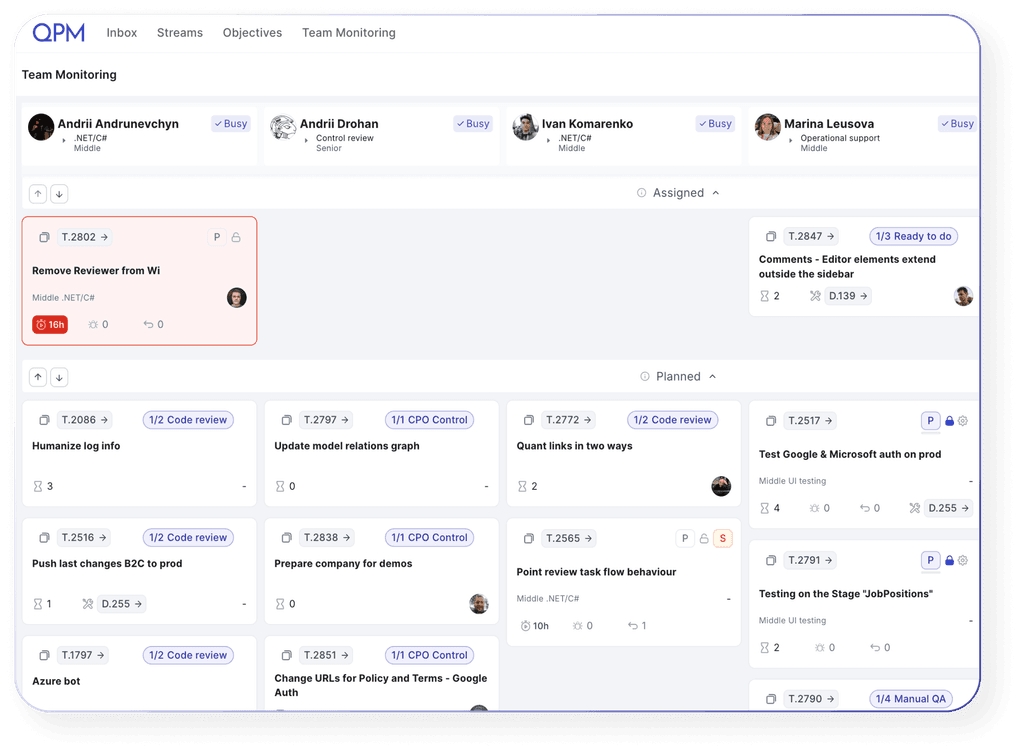
The Team Monitoring feature is particularly valuable — it provides real-time visibility into each member’s workload, helping prevent burnout and excessive multitasking. In game development, this is crucial: inspiration can’t be forced, but it can be sustained through a balanced and healthy work rhythm.

Security and Quality Control — A Core Part of Every Deadline
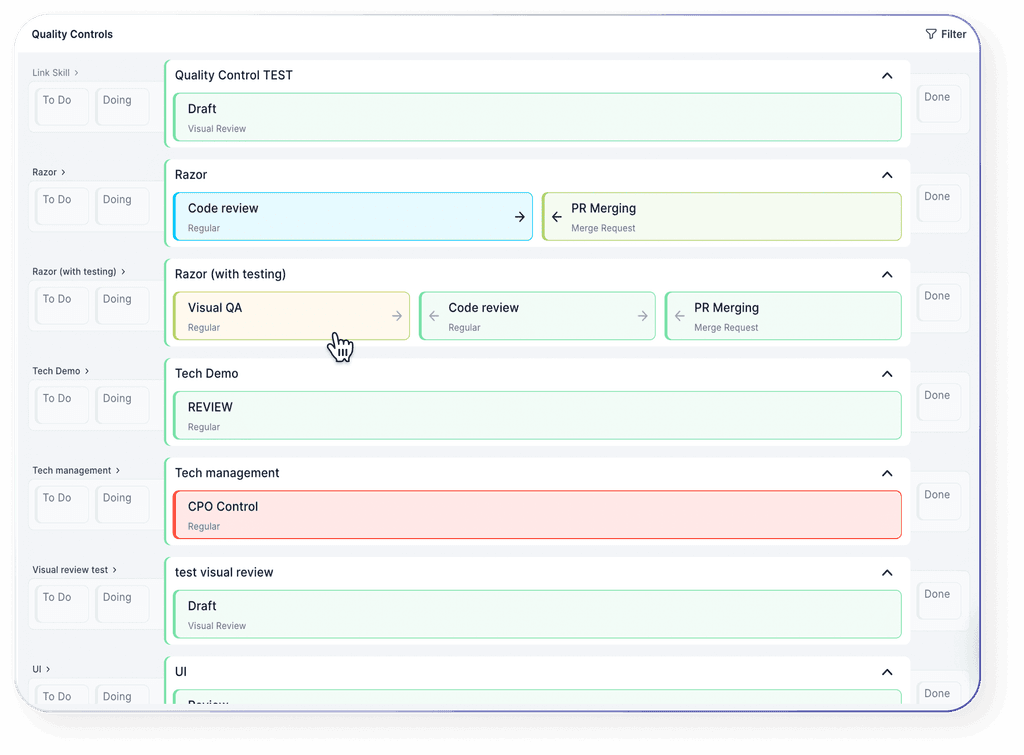
In the rush to meet deadlines, quality can easily be compromised. That’s why QPM integrates Quality Control and Secure Data Access even in its basic plan.
Secure Data Access is a permission management system for project data that ensures secure file storage, edit tracking, and restricted access for unauthorized users. Teams can manage reviews, file versions, and data access without worrying about asset loss or information leaks.
Thanks to the Bug & Defect Tracking system, developers and testers work within a unified environment — where issues are logged, tracked, and resolved without losing context.
How QPM Pricing Plans Support Game Development Teams of All Sizes
QPM is designed for teams that grow alongside their products. The QPM Free, Basic, and Standard tariff plans meet the needs of studios ranging from indie developers to large-scale productions.
Free — for small teams who want to explore all core tools: Task Board, Autoplanning, Defect Tracking, Buffer Time Planning, and more.
Basic — ideal for cross-functional teams of up to 20 users, providing access to Gantt Charts, Quality Control, Resource Management, and two personal calendars.
Standard — built for studios managing multiple streams (up to 20 projects), with advanced role management, performance monitoring, up to 50 users, and 20 GB of storage.
All plans include integrations, notifications, Journaling, Relations Diagram, and other features that simplify development management.
Measuring Progress Without Micromanagement
Managing deadlines doesn’t mean constant supervision. QPM automatically tracks progress through Team Monitoring and Gantt Charts.
A manager can see not only the status of each task but also the team’s overall performance indicators — how closely the plan aligns with reality, where delays occur, and how much buffer time has already been used. This enables data-driven decision-making, not intuition.
Balance Between Creativity and Results
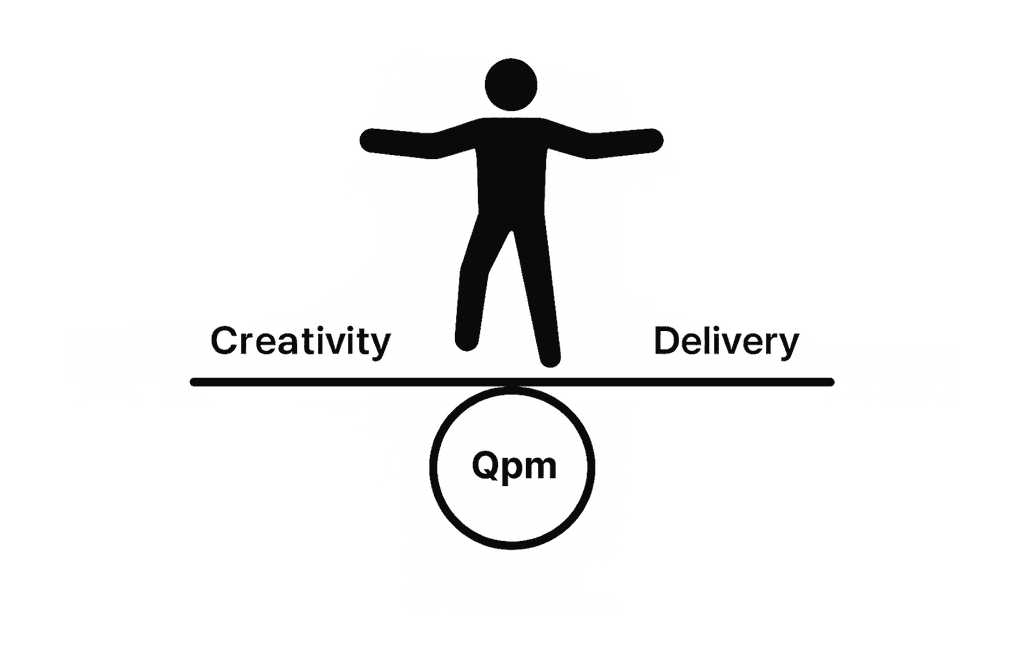
Deadlines shouldn’t kill creativity. On the contrary, when processes are structured, the team feels confident and can focus on what truly matters — creating a game that captivates players. QPM doesn’t limit flexibility, it creates an environment where structure supports inspiration. Automation removes chaos, buffers protect against unforeseen delays, and transparency allows the team to see the whole picture without stress.
Conclusion
Managing deadlines in game development is the art of balancing creativity and structure. Where traditional task trackers stop, QPM helps game dev teams stay productive, aligned, and ready for challenges.
Buffer planning, automatic task allocation, transparent reporting, and a flexible pricing structure — all these create an ecosystem where deadlines stop being a threat and become a tool for success.