What Is Buffer Planning and Why Your Projects Need It

Introduction: Why Projects Rarely Go as Planned
Every project manager knows this uncomfortable truth: no matter how carefully you plan, something unexpected always happens. A developer gets sick, a supplier misses a deadline, or the client changes requirements at the last minute. Without a safety net, even the most promising project can spiral out of control.
This is where buffer planning comes in. By strategically adding “time cushions” to your schedule, you prepare your team for the unpredictable while still staying on track. In modern project management buffer planning is not just a good practice, it is essential. In QPM.ai, buffer planning is enhanced through smart, automated buffer calculations and seamless Gantt visualization to protect your deadlines.
What Is Buffer Planning?
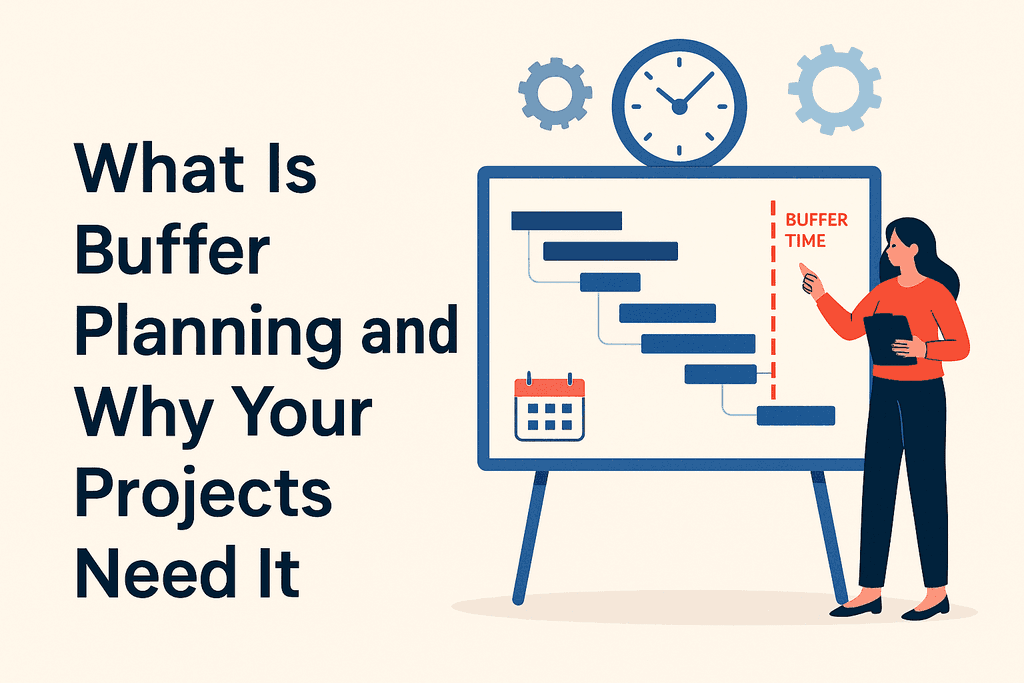
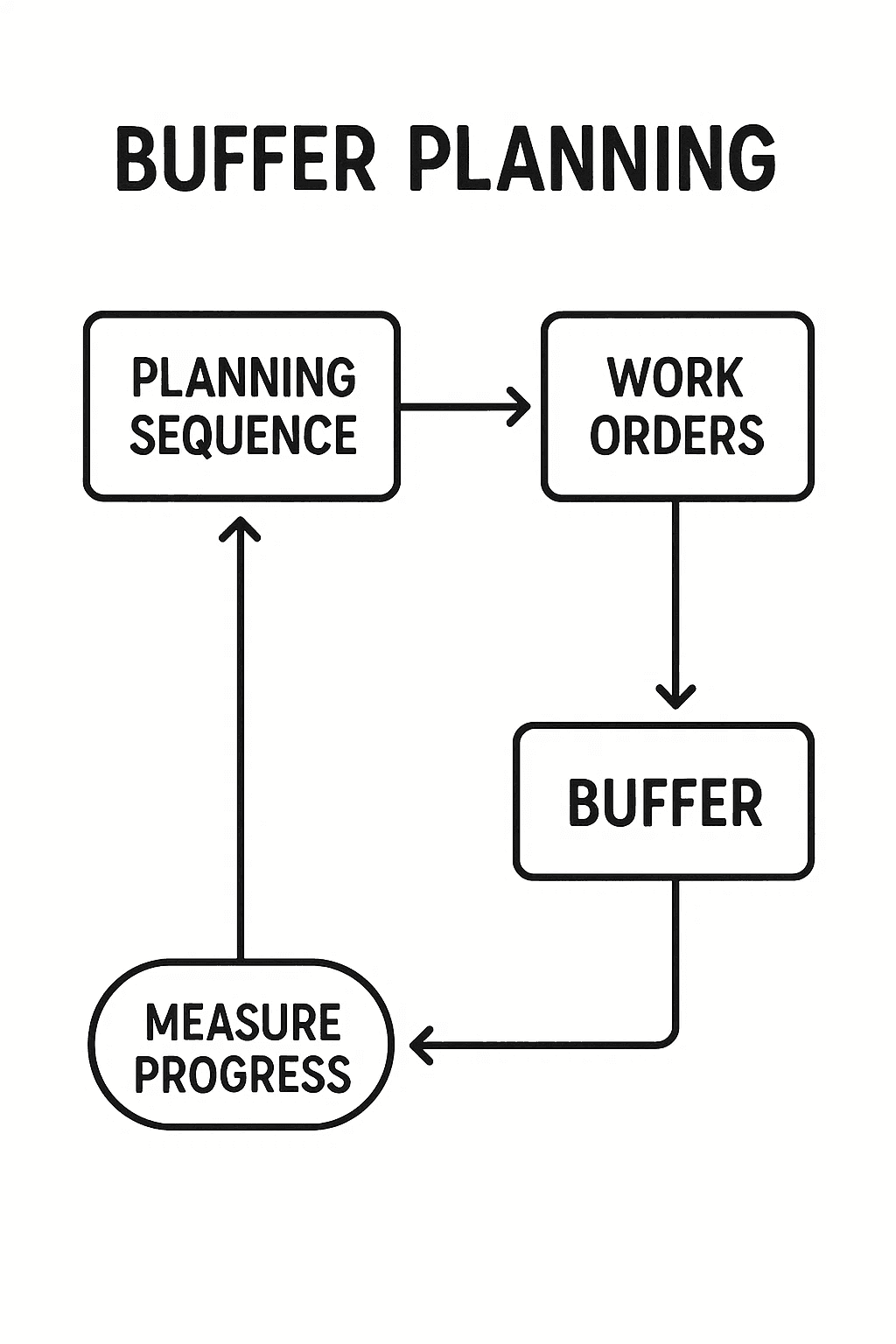
Buffer planning is a risk management technique that introduces additional time or resources into a project plan to absorb uncertainties and mitigate potential risks. Instead of assuming everything will go perfectly, buffer planning acknowledges reality: tasks take longer, dependencies fail, and external risks appear. QPM.ai extends this concept by enabling buffers at the task, goal, and iteration levels, with automatic expected end and dynamic buffer calculations visualized in your Gantt chart.
Why Projects Need Buffer Planning
Without buffers, projects often suffer from the “domino effect.” A single delay cascades through the schedule, derailing milestones and leading to cost overruns. Buffer planning directly addresses this problem.
Key Benefits of Buffer Planning
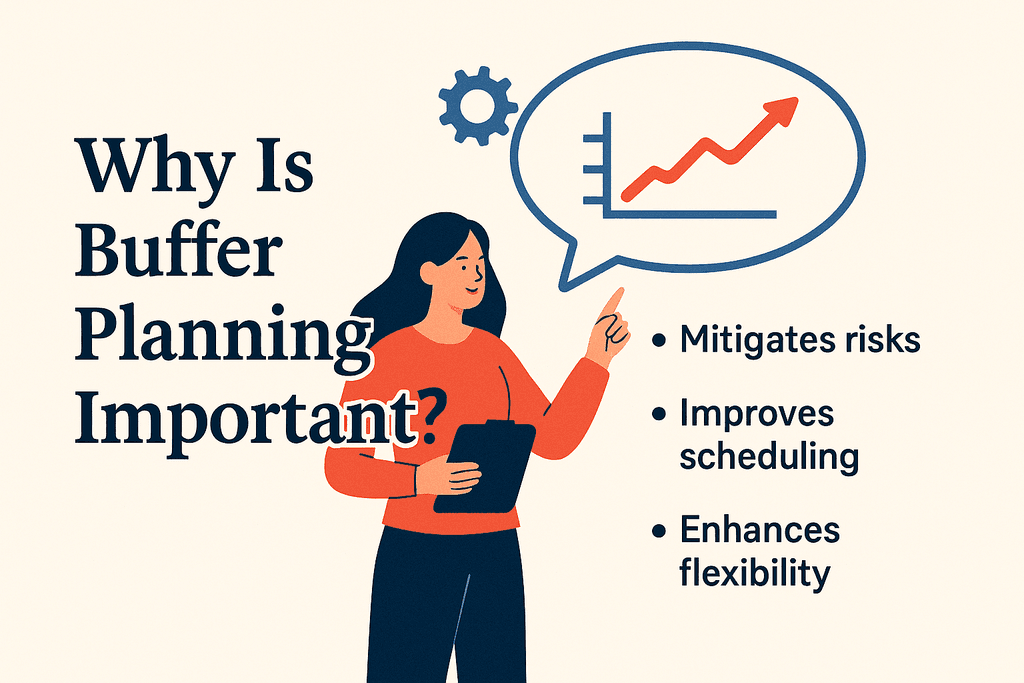
- Risk Absorption
Buffers act as shock absorbers against unforeseen events. Instead of collapsing the entire timeline, delays are contained.
- Reduced Stress for Teams
When every deadline is razor-thin, teams burn out. Buffers provide psychological safety, reducing pressure and enhancing productivity.
- Improved Stakeholder Communication
By explicitly planning for uncertainty, managers set more realistic expectations with clients, sponsors, and executives.
- Higher On-Time Delivery Rates
Studies in project management indicate that incorporating buffers significantly increases the likelihood of completing projects on time.
- Scalability Across Industries
Whether in software development, construction, or marketing campaigns, buffer planning is universally applicable.
The Science Behind Buffer Planning
The concept is strongly tied to Critical Chain Project Management (CCPM). QPM.ai builds on this by offering both Critical and Feeding Buffers that are automatically calculated and visualized, thereby improving visibility and control.
This scientific approach helps avoid Parkinson’s Law (work expands to fill the time available) and Student Syndrome (the tendency to start late and rush).
Common Myths About Buffer Planning
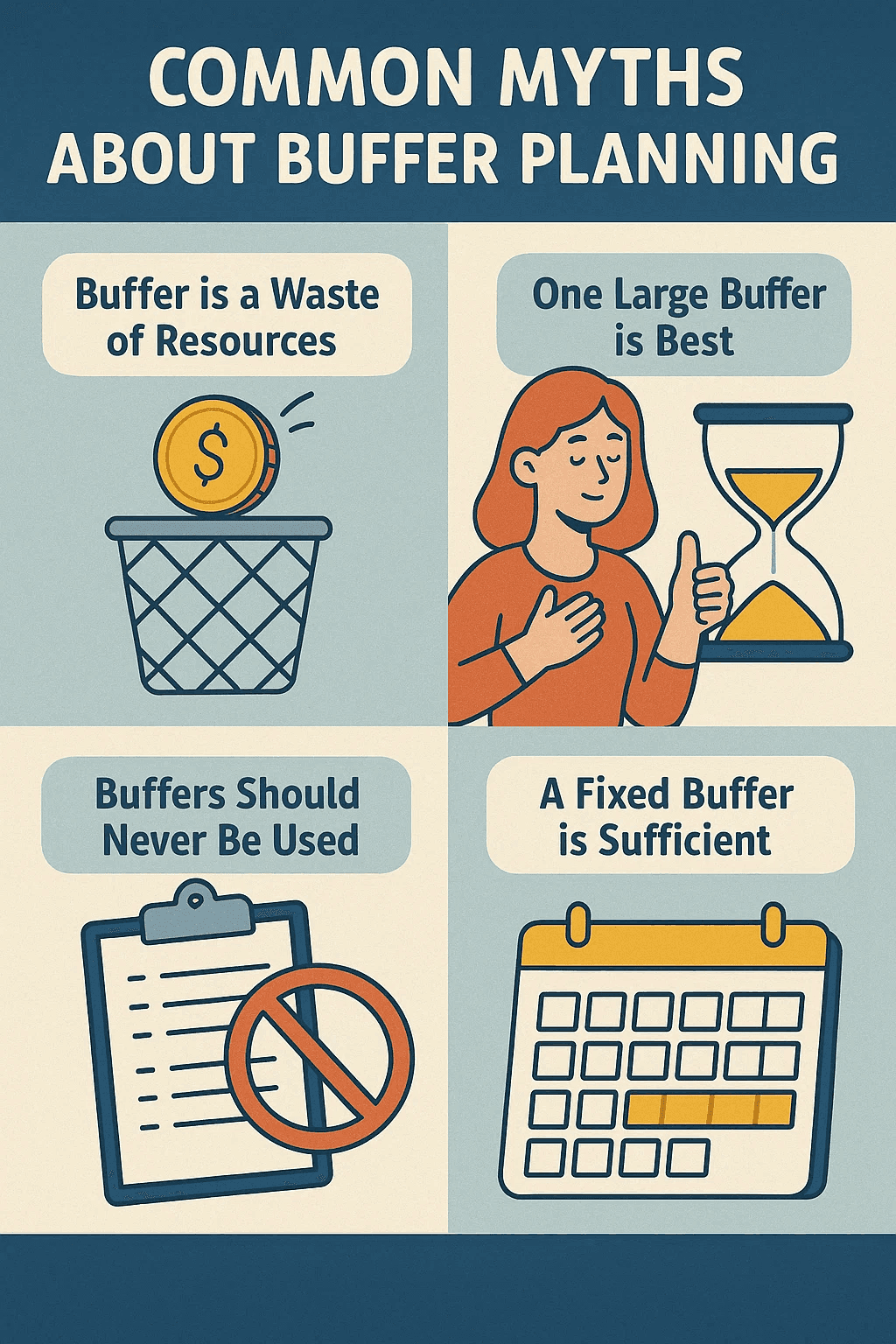
“It’s just wasted time.” → Wrong. Buffers aren’t wasted — they are proactive risk management. Most projects underestimate uncertainties.
“We’ll just work faster if something happens.” → Crisis-mode work leads to burnout and errors, not sustainable success.
“Clients won’t accept buffers.” → In reality, clients prefer reliable timelines. Transparent buffer planning builds trust.
QPM.ai Buffer Planning
Traditional buffer planning relies on experience and estimation. Traditional buffer planning relies on experience and estimation. In contrast, QPM.ai empowers teams with intelegent automation algorithms: it calculates buffer sizes (Expected End and dynamic buffers), visualizes them on the Gantt chart, and updates them in real time based on project changes, ensuring accurate and intelligent scheduling.
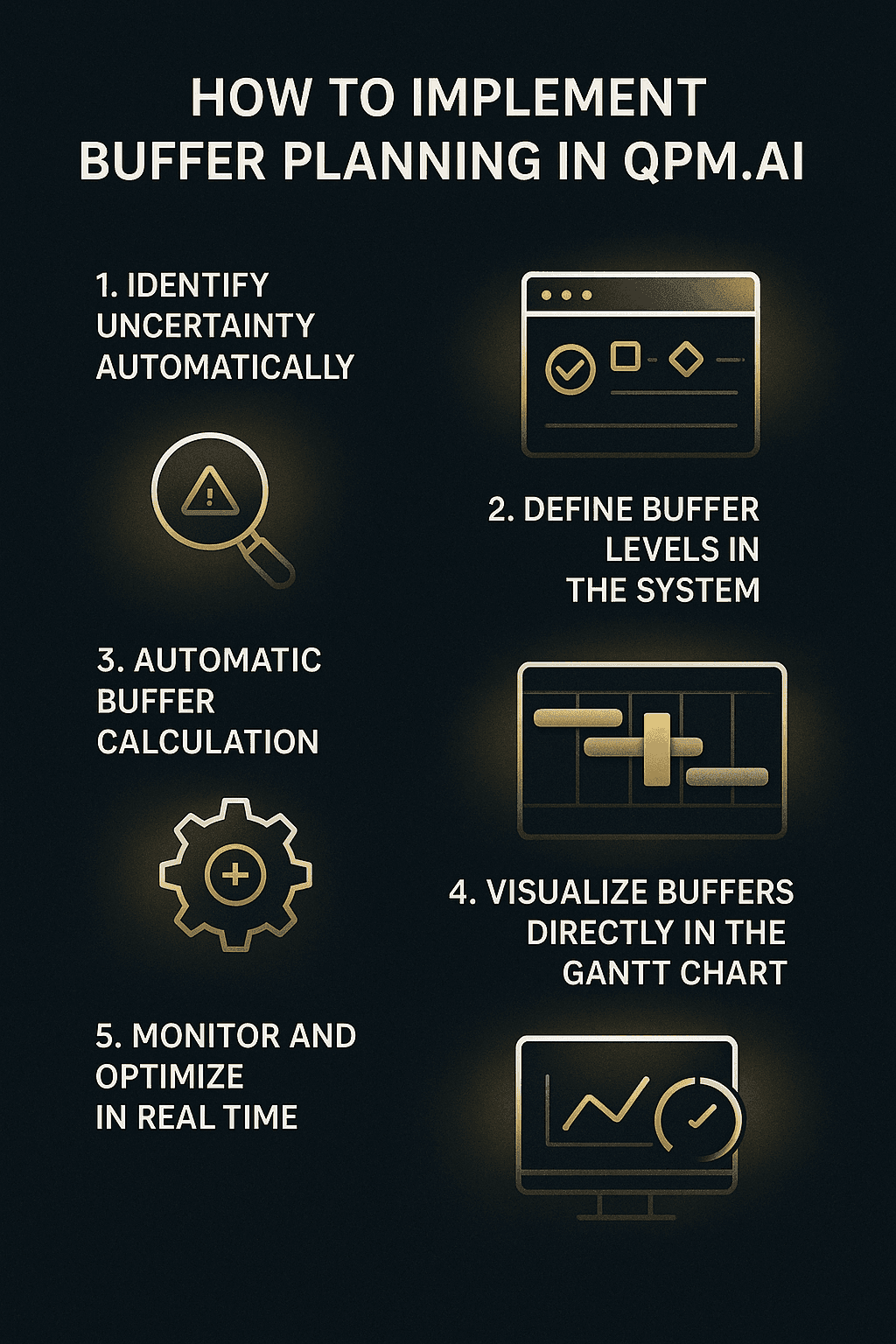
How to Implement Buffer Planning in QPM.ai
1. Identify Uncertainty Automatically
Instead of manually analyzing historical data, QPM.ai uses AI to detect risks by tracking project performance, historical delays, and recurring bottlenecks. The system highlights tasks, dependencies, or iterations where overruns are most likely to occur, giving you a clear view of potential trouble spots.
2. Define Buffer Levels in the System
QPM.ai allows you to add buffers at different levels — tasks, goals, or entire iterations. You can choose between Critical Buffers (to protect final deadlines) and Feeding Buffers (to prevent delays from spreading across dependencies). This ensures flexibility, whether you are managing small sprints or complex multi-team projects.
3. Automatic Buffer Calculation
Forget manual calculations or guesswork. QPM.ai dynamically calculates buffer sizes using its Expected End and Dynamic Buffer algorithms, based on project complexity and real-time risk data. This eliminates the need for fixed percentages, such as the traditional “10–20% rule,” ensuring buffer sizes are precise and adaptive.
4. Visualize Buffers Directly in the Gantt Chart
All buffers are automatically placed and clearly visualized on the Gantt chart, so you can instantly see which tasks are protected and how much buffer remains. This makes it easy to understand where risks are being mitigated and to communicate timelines to stakeholders.
5. Monitor and Optimize in Real Time
QPM.ai continuously tracks buffer consumption and issues alerts when buffers are at risk of being fully used. As the project progresses, the system automatically reallocates time, adjusts plans, and updates Expected End dates to keep schedules accurate and reliable without manual effort.
With QPM.ai, buffer planning becomes a fully automated and adaptive process. From identifying risks to calculating buffers and visualizing them in real time, the platform gives you total control over uncertainty — without spreadsheets, manual calculations, or last-minute chaos.
Conclusion: Buffers Are Not a Luxury, They Are a Necessity
Project managers who ignore uncertainty set themselves up for failure. Buffer planning is not about pessimism; it’s about realism. With QPM.ai’s automated buffer planning features: critical and feeding buffers, Expected-End, and real-time buffer consumption tracking, teams gain resilience, reduce stress, and improve delivery outcomes without manual effort.
Want to see how QPM.ai can optimize buffer planning in action? Book a demo QPM.ai and discover how intelligent automation keeps your projects safe, predictable, and successful.