Effective Communication in Remote Game Dev Teams with QPM.ai

Remote work is no longer an exception in the gaming industry — it has become the standard. Many studios now operate across continents, with artists in Europe, developers in Asia, and project leads in North America. This global distribution brings numerous advantages, including access to diverse talent, around-the-clock productivity, and flexibility for teams.
But with opportunity comes complexity. Distributed teams face unique challenges in communication. Misaligned expectations, delayed feedback, and fragmented conversations can quickly snowball into costly mistakes. A single misunderstanding in a design spec or review can cause weeks of rework.
When deadlines are tight and creativity is the lifeblood of your studio, communication is not optional — it’s the foundation of success. QPM.ai is built for exactly this reality: a single platform that unites task management, communication, and workflow automation to keep remote game dev teams aligned, productive, and creative.

As highlighted in the GDC State of the Game Industry Report, unlike many industries, game development involves multiple highly specialized disciplines working together — designers, writers, artists, programmers, QA testers, and producers. Each has its own workflows, tools, and terminology. Coordinating them in the same office is already complex; doing it across time zones magnifies the challenge.
Typical pain points include:
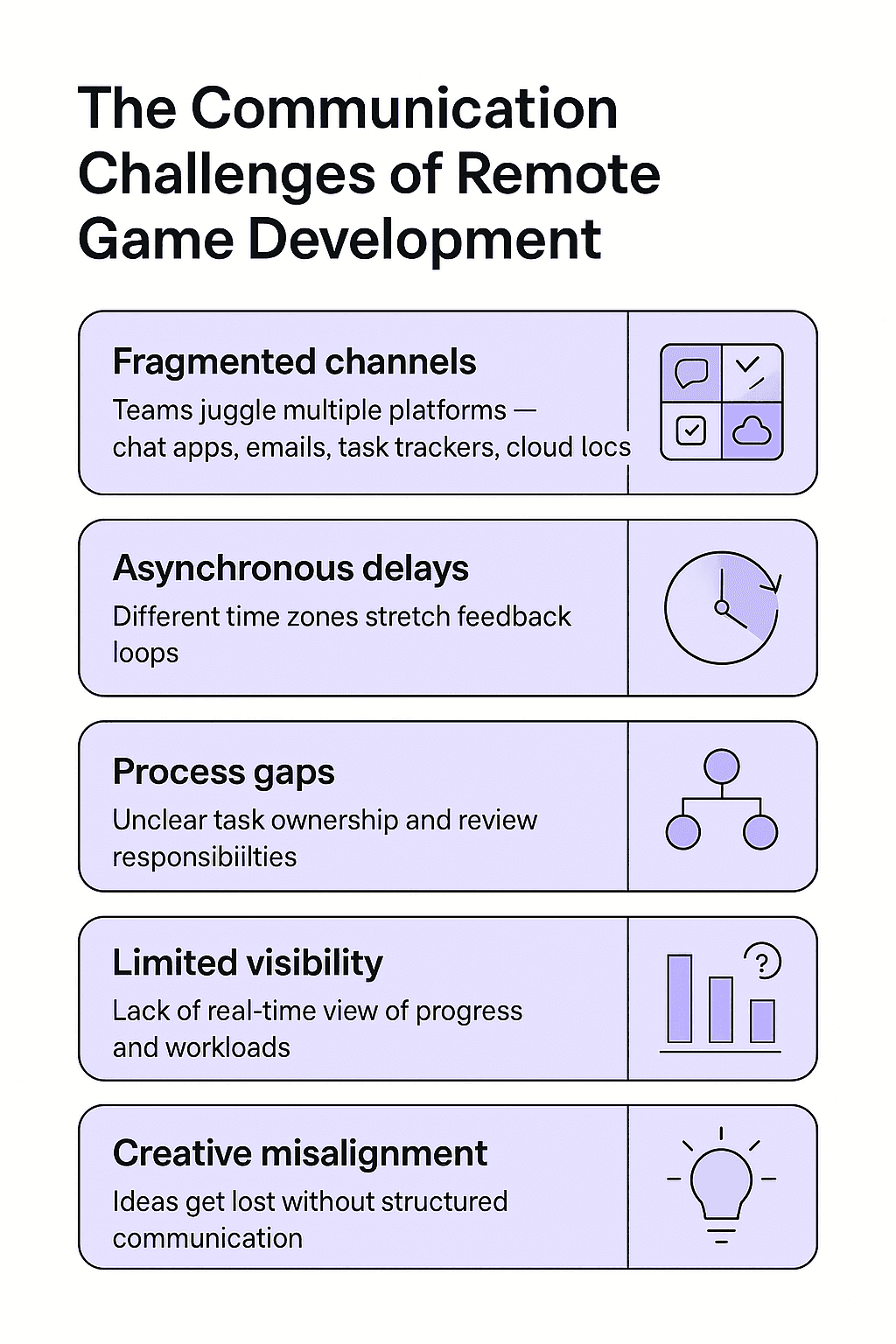
- Fragmented channels
Teams juggle multiple platforms — from emails to task trackers and cloud docs. As information spreads across various tools, it becomes increasingly difficult to maintain context, leading to duplication and miscommunication. - Asynchronous delays
Different time zones stretch feedback loops. A question asked in one region may not be answered until hours later in another area. With each iteration, these delays compound, slowing progress. - Process gaps
When task ownership, review, and responsibilities aren’t clearly structured, teams risk blind spots and uneven quality assurance. - Limited visibility
Producers and leads often lack a real-time view of task progress, dependencies, and workloads. Without clear dashboards, risks stay hidden until deadlines slip. - Creative misalignment
Game development relies on creativity, but without structured communication, ideas can get lost or lose clarity. What’s shared in a brainstorming call may not carry over into the project plan or task tracker.
These challenges are not just “inconveniences.” They directly affect delivery timelines, product quality, and team morale.
Most tools only cover part of the process. Chat apps facilitate ongoing conversations, but they don’t inherently link discussions to tasks. Task trackers help organize work, but don’t provide auto-assignment or quality control.
QPM.ai brings projects, tasks, and conversations together in one platform. It offers features like auto-assignment and auto-planning, quality control, and journaling of all changes. Combined, these capabilities help distributed teams stay aligned and maintain transparency at every stage of development.
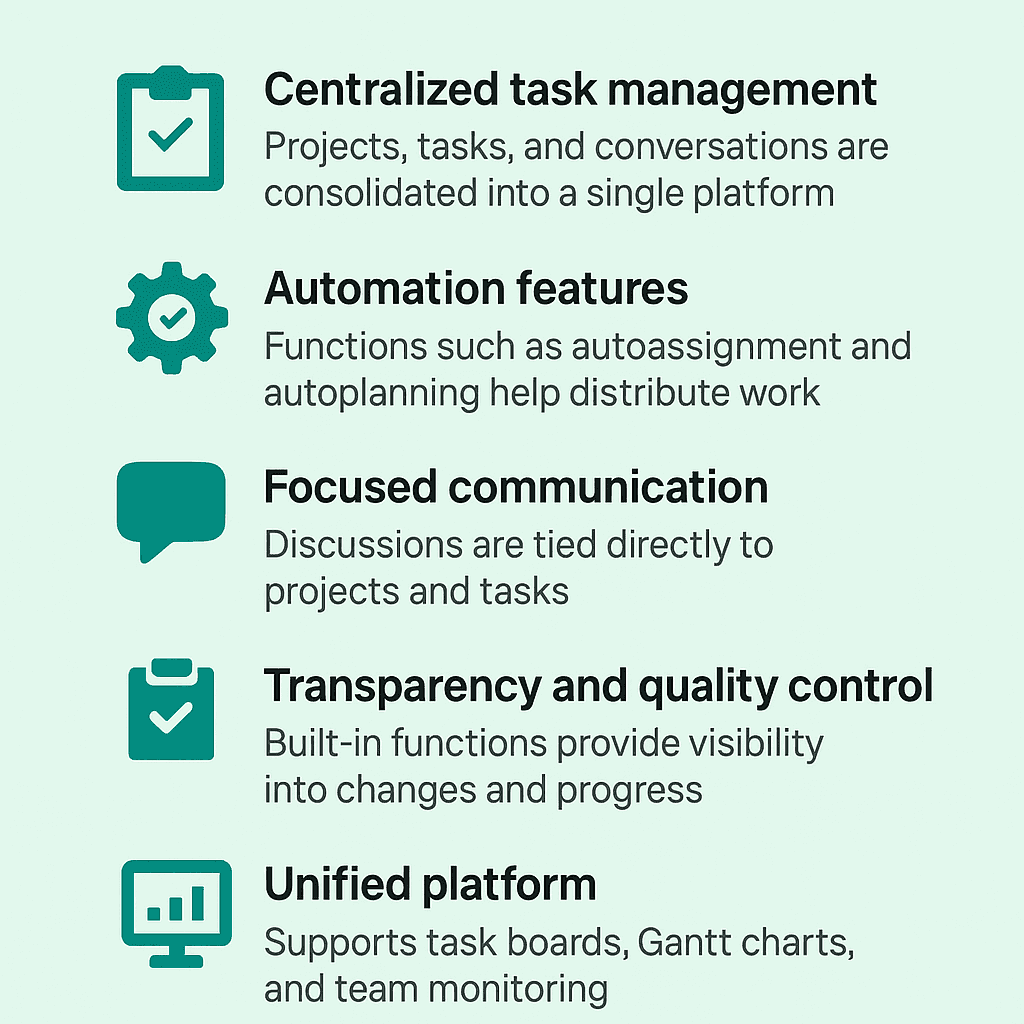
Centralized task management
Projects, tasks, and conversations are consolidated into a single platform. Everyone has access to the same space, so deadlines and dependencies remain visible and organized.Automation features
With features such as autoassignment and autoplanning, QPM.ai helps distribute work and streamline scheduling, thereby reducing manual coordination.Transparency and quality control
Built-in quality control and journaling functions provide teams with visibility into changes, progress, and accountability at every stage of the project.Unified platform
Alongside task and communication features, QPM.ai supports task boards, Gantt charts, and team monitoring, helping distributed teams collaborate seamlessly.
Best Practices for Remote Game Dev Communication with QPM.ai
1. Embrace asynchronous updates
Not every discussion needs a meeting. In QPM.ai, projects, tasks, and comments are kept in one place. Teams can share updates directly within tasks, reducing meeting fatigue and ensuring information stays connected to the actual work.
2. Support quality control
QPM.ai includes built-in quality control features. Reviews and feedback are logged alongside tasks, making the process transparent and helping teams maintain consistent standards.
3. Visualize deadlines and dependencies
Task boards and Gantt-style views show how tasks interconnect. Teams can visualize dependencies, identify bottlenecks, and comprehend how delays in one area impact the overall schedule.
4. Document decisions in context
Instead of long email chains, key decisions are recorded directly within task threads and journaling. If questions come up later — “Why did we choose this shader pipeline?” — the reasoning is already linked to the original task.
5. Automate reporting
Dashboards provide real-time visibility into progress, workloads, and risks. Producers and leads don’t need to chase updates — the system automatically keeps information up to date.
6. Enable structured communication
QPM.ai ties conversations to the relevant projects and tasks, ensuring clarity around ownership and responsibilities. This structure helps teams focus on creativity instead of searching for scattered information.
Case Example: From Chaos to Clarity
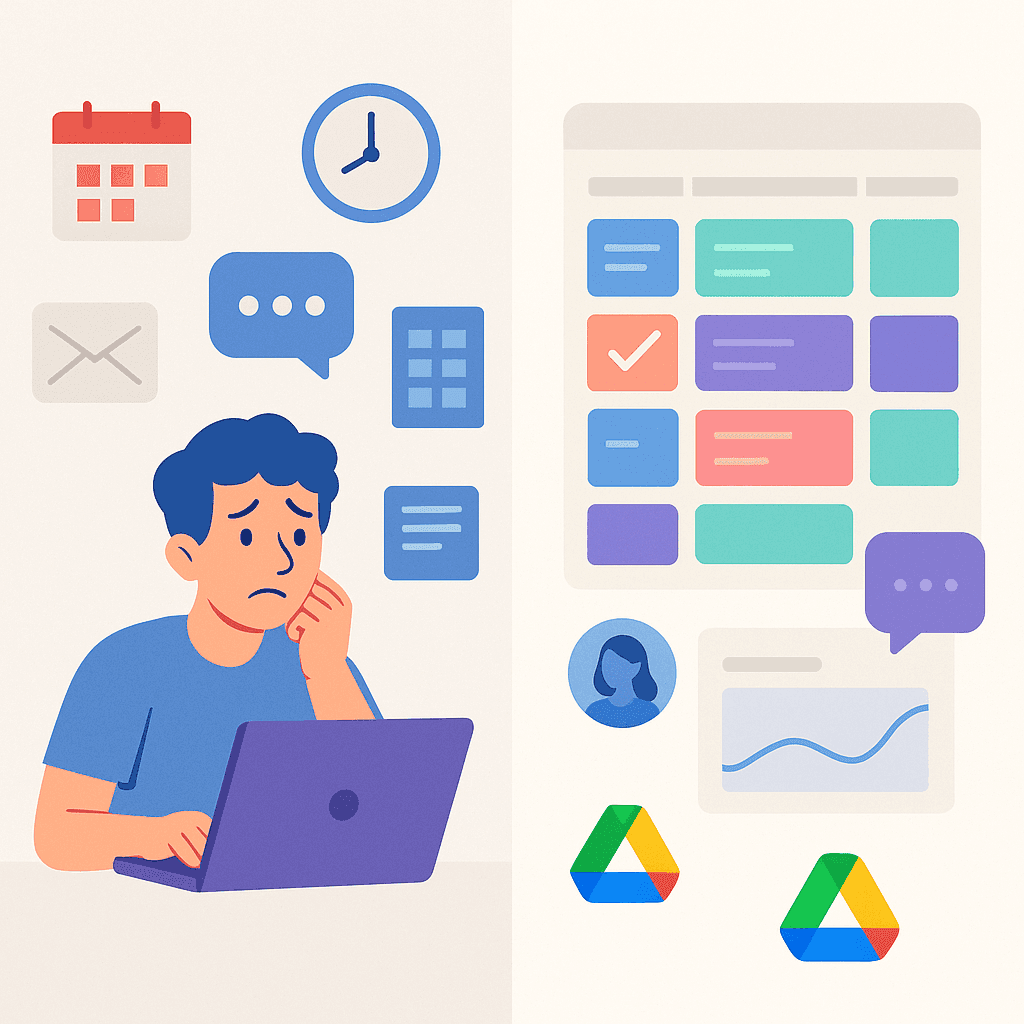
Before adopting QPM.ai, the team managed their work through a mix of disconnected tools and manual coordination. Conversations, tasks, and files lived in separate places, making it difficult to keep track of progress and maintain consistency.
Challenges they faced:
Duplicate work happened when multiple developers unknowingly worked on the same issue.
Missed deadlines occurred because creative assets weren’t reviewed or approved in time.
Role confusion led to reviewers approving their own tasks or unclear ownership.
Producers spent hours each week manually gathering updates from different sources.
Task-type-based rule sets
Different logic can be applied to different task types (e.g., bugs vs. new features) for more precise and contextual assignment.
After adopting QPM.ai
With QPM.ai, the studio brought projects, tasks, and communication together in one structured platform:
Tasks were automatically assigned according to roles, supported by built-in quality control.
Contextual communication within each task kept discussions focused and connected to the actual work.
Automated reporting provided real-time visibility into progress and reduced manual follow-up time.
Clear transparency allowed everyone to see which milestones were on track and where bottlenecks appeared.
The result
Faster delivery, fewer mistakes, and a more motivated team — one that can focus on creating games instead of managing fragmented tools and processes.
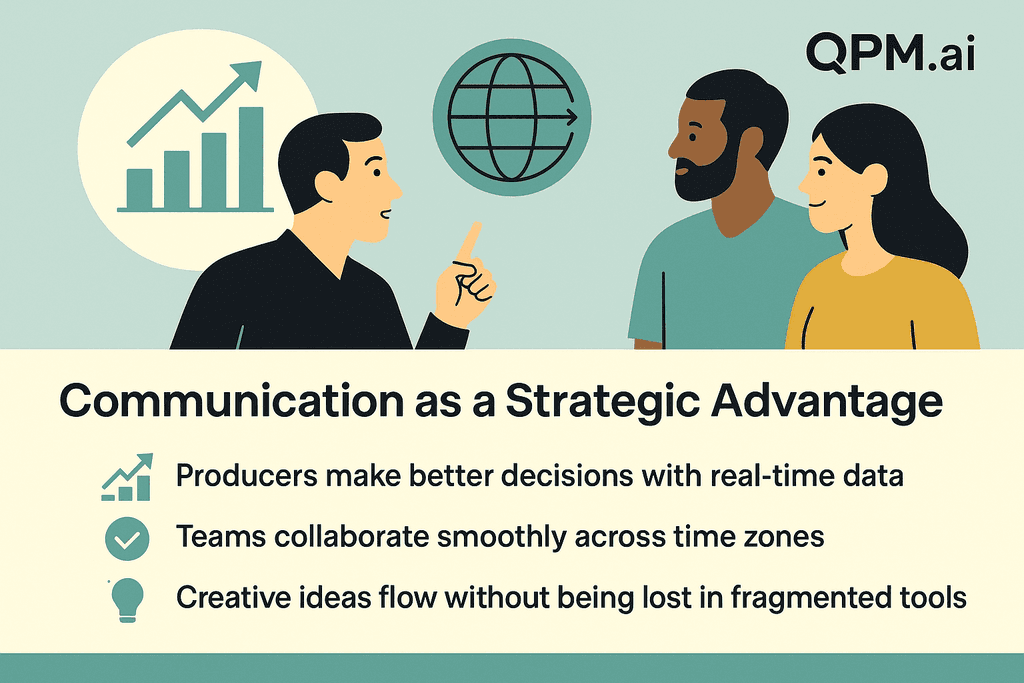
The Bigger Picture: Communication as a Strategic Advantage
Remote communication isn’t just about avoiding mistakes — it’s a competitive advantage. Studios that communicate well ship faster, maintain higher quality, and attract top talent who want structured, effective workflows.
In an industry where burnout is prevalent, structured communication helps reduce stress and promote a healthy work-life balance. Clear expectations and transparent workflows mean fewer late nights and healthier teams.
With QPM.ai, communication becomes a strategic enabler:
Producers make better decisions with real-time data.
Teams collaborate smoothly across time zones.
Creative ideas flow without being lost in fragmented tools.

Conclusion
Game development is both an art and a science. Creativity fuels innovation, but without strong communication, even the best ideas can collapse under the weight of misalignment and delays. For distributed teams, this challenge is magnified — but it’s also an opportunity. By adopting platforms like QPM.ai, studios can transform communication from a liability into a strength.
QPM.ai centralizes workflows, enforces quality-saving rules, and makes communication contextual, transparent, and efficient. The result: remote game dev teams that stay aligned, deliver on time, and keep their creative spark alive. In the fast-moving world of gaming, the studios that master communication will be the ones that thrive. With QPM.ai, your team can be one of them.